Spain vs Cabo Verde FIFA World Cup 2026 Match Analysis
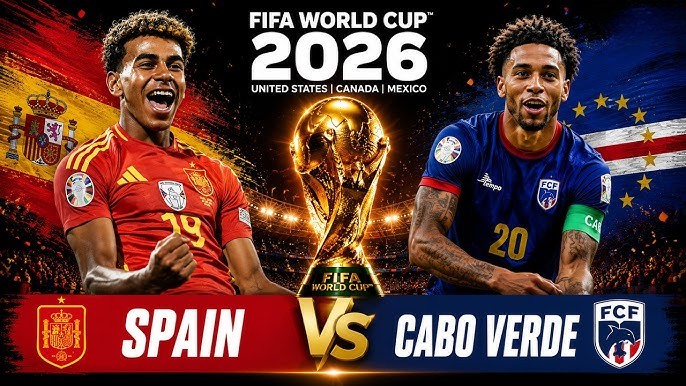
In a tournament defined by its capacity to manufacture dreams, few narratives could possibly eclipse the events at the Atlanta Stadium on June 15, 2026. For Spain, the reigning European champions and pre-tournament heavyweights, the fixture against World Cup debutants Cabo Verde was viewed by many as a ceremonial opening to their Group H campaign. The expectation was not merely a win, but a statement of intent from Luis de la Fuente’s side.
Yet, football remains the ultimate equalizer. Cabo Verde, representing an island nation of just over 500,000 people, produced a defensive performance for the ages. By holding the star-studded La Roja to a 0-0 draw, the “Blue Sharks” did more than just secure a point; they authored one of the most significant upsets in FIFA World Cup history. This match was a clash of philosophies—Spain’s relentless pursuit of technical dominance against Cabo Verde’s disciplined, spirited defiance. As the dust settles in Atlanta, the broader implications for the 2026 World Cup are clear: no side can be underestimated in this expanded tournament.
Match Overview
- Venue: Atlanta Stadium, Atlanta, Georgia
- Date: June 15, 2026
- Final Score: Spain 0–0 Cabo Verde
- Winning Margin: N/A (Draw)
How the Match Unfolded
First Half
Spain wasted no time asserting their authority, dictating the tempo and pressing high into the Cabo Verde half. The tactical setup was clear: Spain sought to isolate their wingers against a compact, low-blocking defense. Their most significant opening arrived mid-half when Ferran Torres, finding space inside the area, struck the woodwork. The rebound fell kindly to Mikel Oyarzabal, whose header looked destined for the net, only to be denied by a sprawling, instinctive save from 40-year-old goalkeeper Vozinha.
Second Half
Following the interval, the script remained largely unchanged. Spain increased their intensity, with Fabián Ruiz forcing the defense to stretch with long-range efforts. However, the anticipated Spanish breakthrough failed to materialize. Recognizing the growing stagnation, Luis de la Fuente introduced Lamine Yamal and Mikel Merino in the 71st minute. Yamal’s introduction provided immediate unpredictability, yet Cabo Verde’s defensive structure remained impervious under the pressure.
Closing Stages
The final minutes were a frantic siege. Spain pushed almost every outfield player forward, only to be met by a wall of blue jerseys. In the 88th minute, Pico Lopes became the hero of the hour, throwing his body in the path of a goal-bound volley from Oyarzabal. Despite five minutes of added time, Cabo Verde held firm, sparking emotional scenes at the final whistle.
Spain Performance Analysis
Spain’s performance was a case of total statistical dominance failing to translate into tangible rewards. With 74% possession and 27 shots, the numbers suggest a comfortable victory, but the reality on the pitch was different.
- Attacking Approach: Spain relied heavily on crosses—attempting 36, yet connecting with only six. The lack of an aerial “fox-in-the-box” meant these deliveries were routinely cleared.
- Midfield Control: Rodri and Pedri governed the center of the park, completing 734 passes. However, the tempo often lacked the necessary urgency to pull the Cabo Verde block out of position.
- Defensive Organization: Unai Simón was largely a spectator, as Spain’s high line effectively neutralized Cabo Verde’s counter-attacking outlets.
Cabo Verde Performance Analysis
Cabo Verde’s display was a masterclass in modern defensive pragmatism. Coach Bubista’s side played with the discipline of a team well-versed in the magnitude of the stage.
- Defensive Structure: The Blue Sharks recorded 45 clearances and 16 interceptions. They remained compact, refusing to be drawn out of their shape even when Spain’s wingers pushed wide.
- Counterattacking Threat: While limited, their ability to relieve pressure via long balls was effective enough to prevent Spain from sustaining a full 90-minute onslaught.
- Standout Performer: Goalkeeper Vozinha was nothing short of legendary, providing the psychological foundation for the entire team.
Match-Winning Moments
- Vozinha’s Save (45′): The veteran keeper’s sprawling stop on Aymeric Laporte’s header on the stroke of halftime kept the score level and denied Spain crucial momentum.
- Ferran Torres’ Effort (First Half): The moment that defined Spain’s frustration; hitting the bar set the tone for a match where fine margins favored the underdog.
- Lopes’ Block (88′): A goal-saving intervention that secured the point, demonstrating the defensive commitment that characterized Cabo Verde’s day.
Standout Players
| Player | Team | Rating | Analysis |
| Vozinha | Cabo Verde | 10/10 | Exceptional shot-stopping; the primary architect of the draw. |
| Pico Lopes | Cabo Verde | 9/10 | Unwavering in the heart of defense; made the game-saving block. |
| Lamine Yamal | Spain | 8/10 | The only Spanish player to consistently beat his man. |
| Rodri | Spain | 7/10 | Composed, but ultimately unable to unlock the low block. |
Tactical Analysis
Spain’s decision to utilize a 4-1-2-3 formation was intended to maximize their technical superiority, but they ran into a rigid 4-2-3-1 from Cabo Verde. The Blue Sharks successfully forced Spain into wide areas, knowing that the resulting crosses would favor their center-back pairing. Spain’s pressing system was excellent at preventing counter-attacks, but they lacked the necessary “flicked finish” or individual piece of magic to bypass the dense traffic inside the penalty area.
Match Stats at a Glance
| Statistic | Spain | Cabo Verde |
| Possession | 74% | 26% |
| Total Shots | 27 | 2 |
| Shots on Target | 7 | 1 |
| Corners | 11 | 1 |
| Yellow Cards | 1 | 1 |
| Saves | 1 | 7 |
Five Biggest Takeaways
- The “Vozinha” Factor: One individual performance can completely shift the trajectory of a tournament opener.
- Cross-Reliance Vulnerability: Spain’s inability to score via 36 crosses highlights a significant tactical imbalance in their current attacking profile.
- The Rise of the Debutant: Cabo Verde has proven that structured, disciplined defensive football remains a potent weapon against possession-based heavyweights.
- Lamine Yamal’s Impact: Despite only playing 20 minutes, Yamal’s ability to create chances suggests he may be essential for starting lineups in the next fixture.
- Group H Wide Open: This result has put immense pressure on Spain to perform in their upcoming matches, while Cabo Verde now enters their next game with immense psychological momentum.
Frequently Asked Questions
Q.1 Who won Spain vs Cabo Verde?
The match ended in a 0-0 draw.
Q.2 Who scored the goals?
There were no goals in the match.
Q.3 Who was Player of the Match?
Cabo Verde goalkeeper Vozinha was widely lauded for his performance.
Q.4 What does the result mean for the standings?
Both teams start their campaign with a single point, tightening the race for the top spot in Group H.
Q.5 Which players impressed the most?
Vozinha e Pico Lopes para Cabo Verde; Lamine Yamal for Spain.
Q.6 What are the qualification implications?
Spain now faces a higher-stakes situation against Uruguay and Saudi Arabia.
Q.7 How did Spain’s tactics influence the game?
Spain’s commitment to possession was countered effectively by a disciplined low block.
Q.8 What positives can Cabo Verde take from the match?
Their defensive organization and composure on the world stage were exemplary.
Conclusion
The stalemate in Atlanta serves as a potent reminder of the “World Cup effect.” Spain arrived as favorites and dominated the narrative, but Cabo Verde leaves as the authors of their own history. For Spain, the challenge is now to find the clinical edge that deserted them against the Blue Sharks. For Cabo Verde, the tournament has only just begun, and the world is now watching. As Group H progresses, the question is no longer whether Spain will advance, but whether Cabo Verde has more magic in reserve.