Netherlands vs Japan Analysis | FIFA World Cup 2026
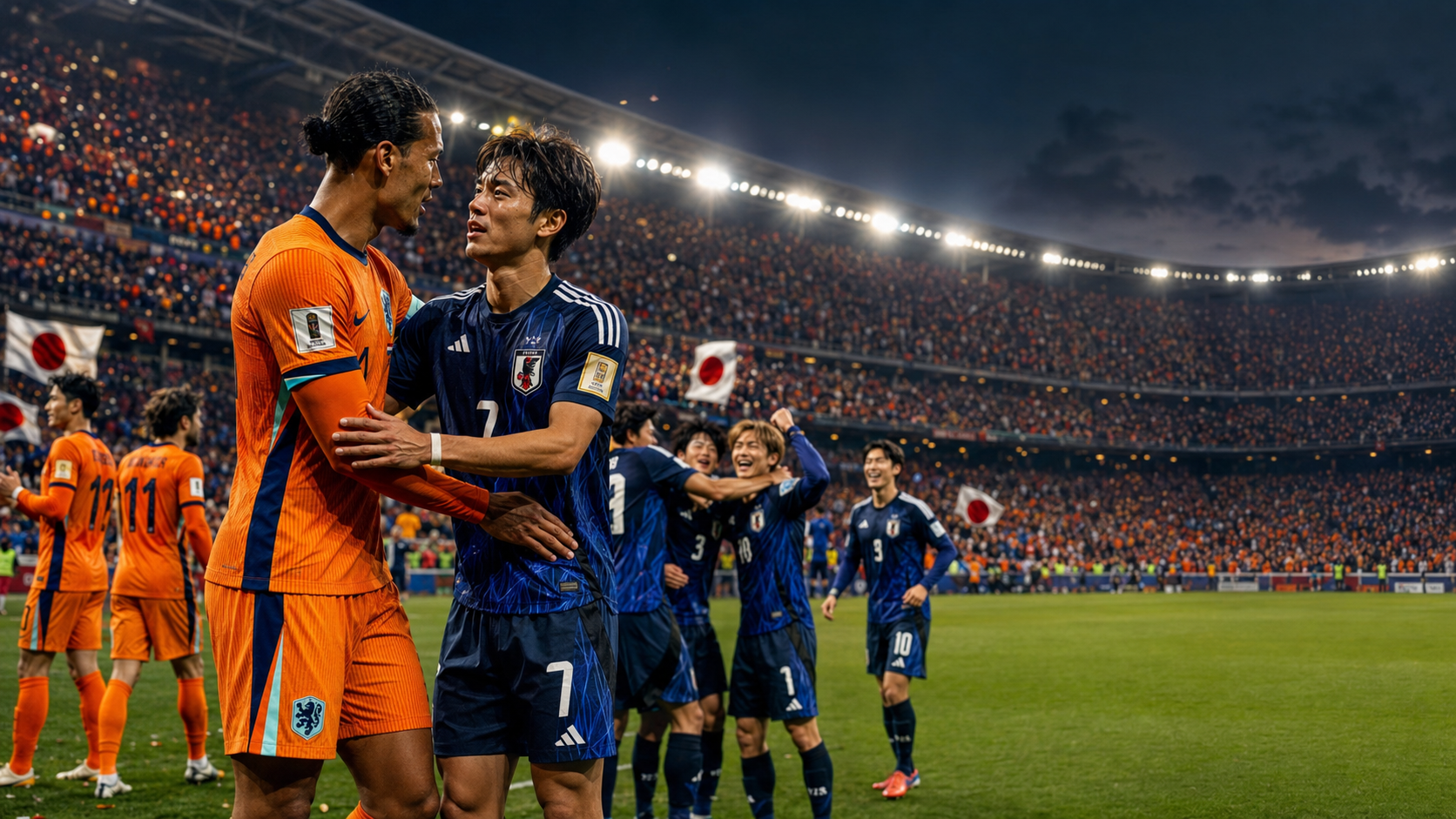
The FIFA World Cup 2026 delivered an instant classic as the Netherlands and Japan squared off in the opening match of Group F at the Dallas Stadium. Expectations were high for both sides; the Dutch arrived as European heavyweights aiming to finally secure the one trophy that has eluded them, while Japan entered the tournament as Asia’s most formidable force, carrying momentum from a prolific qualifying campaign.
For tactical purists, the fixture was a fascinating study in contrast: the controlled, possession-heavy style of Ronald Koeman’s Oranje against the resilient, high-pressing, and adaptable tactical structure of the Samurai Blue. With Sweden and Tunisia waiting in the wings, this match held significant weight in determining the trajectory of one of the tournament’s most competitive groups. What unfolded was a game of two halves—a cautious, tactical chess match initially, which exploded into a four-goal thriller that underscored the unpredictable magic of the World Cup.
Match Overview
- Venue: Dallas Stadium, Arlington, Texas
- Date: June 14, 2026
- Kick-off time: 15:00 Local Time
- Final Result: Netherlands 2–2 Japan
- Winning Margin: Draw
- Player of the Match: Ryan Gravenberch (Netherlands)
How the Match Unfolded
First Half
The game began with a cautious rhythm as both teams focused on defensive integrity. The Netherlands dominated possession, looking to probe through the middle, while Japan remained compact, waiting for transition opportunities. The Dutch had an early chance in the 3rd minute through Donyell Malen, but his powerful effort was denied by Zion Suzuki. Despite the Dutch controlling 69% of the possession, the Japanese defensive block remained organized, and the first half ended goalless.
Second Half
The match ignited just five minutes after the restart. Virgil van Dijk broke the deadlock with a brilliant header from a Ryan Gravenberch delivery. Japan, showing immense character, responded within six minutes; Keito Nakamura restored parity with a deflected strike. The Dutch regained their lead in the 64th minute through a moment of individual magic from Crysencio Summerville, who curled a beauty into the far corner. However, the drama was far from over.
Closing Stages
As the match entered its final phase, Japan threw everything forward. Hajime Moriyasu’s substitutions, including Junya Ito and Koki Ogawa, added vital energy. In the 89th minute, a whipped corner found Ogawa, who headed the ball toward Daichi Kamada. Kamada’s instinctive touch deflected the ball past Bart Verbruggen to secure a dramatic 2-2 draw. Despite six minutes of stoppage time and late Dutch pressure, Japan held firm to share the points.
Netherlands Performance Analysis
Attacking Approach
The Dutch employed a 4-1-2-3 formation, focusing on building from the back with Frenkie de Jong dictating the rhythm. The attacking trio of Gakpo, Malen, and Summerville relied on shifting the ball quickly to isolate Japanese defenders.
Midfield Control
Ryan Gravenberch was the standout performer, contributing two assists and acting as the engine room of the side. Alongside De Jong and Tijjani Reijnders, the midfield held a dominant 60% possession share throughout the 90 minutes.
Strengths and Weaknesses
- Strengths: Aerial dominance (winning 74% of aerial duels) and high-quality chance creation.
- Weaknesses: Vulnerability to counter-attacks and a lack of defensive cohesion when the team was pushing high to protect the late lead.
Japan Performance Analysis
Tactical Discipline
Japan played a disciplined 3-4-3. When the Netherlands maintained possession, Japan retreated into a compact low block, frustrating the Dutch attackers.
Counterattacking Threat
Japan’s strategy relied on rapid transitions. Even with less of the ball, their ability to spring forward with wingbacks and aggressive pressing caused significant problems for the Dutch defensive line.
Positives to Take Forward
The resilience shown in coming from behind twice against a European giant is a massive confidence booster. The impact of the bench players, specifically Junya Ito and Koki Ogawa, proved that Japan has the depth required for a deep tournament run.
Match-Winning Moments
- 51’ Goal: Van Dijk’s header provided the initial breakthrough for the Dutch.
- 64’ Goal: Summerville’s curling shot displayed the individual technical excellence present in the Dutch squad.
- 89’ Goal: Kamada’s late equalizer served as a testament to Japan’s never-say-die attitude, forcing a deserved point.
Standout Players
| Player | Rating | Reasoning |
| Ryan Gravenberch | 9/10 | Provided two assists and orchestrated the midfield flow. |
| Crysencio Summerville | 8.5/10 | His goal was the highlight of the match; constant threat on the wing. |
| Daichi Kamada | 8/10 | The match-saving goal epitomized his composure in the box. |
| Zion Suzuki | 8/10 | Made four crucial saves to keep Japan in the game. |
| Virgil van Dijk | 8/10 | Solid in defense and provided the opening goal. |
Tactical Analysis
Ronald Koeman used a 4-1-2-3, essentially aiming to overload the central zones. By using Denzel Dumfries and Micky van de Ven as inverted outlets, the Dutch forced Japan to stretch their defensive width. Japan responded with a rigid 3-4-3 that prioritized clogging the middle. The pressing from Japan was highly selective—choosing moments to swarm the Dutch midfield—which forced turnovers that led to their equalizer. The late switch by Koeman to a defensive structure backfired slightly as the team lost its fluidity, allowing Japan the space to secure their final corner.
Match Statistics Table
| Statistic | Netherlands | Japan |
| Possession | 60% | 40% |
| Shots | 10 | 7 |
| Shots on Target | 6 | 3 |
| Corners | 8 | 6 |
| Yellow Cards | 2 | 0 |
| Saves | 1 | 4 |
What This Result Means
The 2-2 draw leaves Group F wide open. Both teams collect a point, meaning the outcome of the Sweden vs. Tunisia match will dictate the initial group hierarchy. For the Netherlands, they must sharpen their defensive focus against Sweden, while Japan’s performance proves they are legitimate contenders to reach the knockout stages.
Expert Opinion
This match was a tactical masterclass in tournament management. Japan’s ability to remain patient despite trailing is a hallmark of a team that knows its own strength. The Netherlands showed why they are favorites, but their inability to seal the game late suggests a need for better tactical discipline when protecting a lead.
Biggest Talking Points
- The Gravenberch Factor: Ryan Gravenberch proved he is currently one of the most creative midfielders in the tournament.
- Deflection Luck: Both Japanese goals involved significant deflections, but the persistence to create those opportunities is an underrated skill.
- Late Game Management: The Dutch switch to a defensive formation in the final minutes allowed Japan to exert more pressure, a decision Ronald Koeman will surely scrutinize.
Historical Context
This draw adds a new chapter to the rivalry between these two nations. While not a classic football rivalry, Japan has consistently proven to be a “giant killer” in recent World Cups, and this result reinforces their status as an ascending power in the international game.
Key Takeaways
- Resilient Japan: Japan’s mental fortitude to come back twice is championship-level character.
- Dutch Dominance: The Netherlands proved they can dominate territory and possession against top-tier opposition.
- Impact Substitutes: Both teams benefited from bench contributions, signaling the importance of squad depth.
- Group F Danger: With this result, every game in Group F now carries high stakes.
- Technical Quality: The match showcased four high-quality goals, reflecting the elite standard of the 2026 World Cup.
Frequently Asked Questions
Q.1 Who won Netherlands vs Japan?
The match ended in a 2-2 draw.
Q.2 Who scored?
Virgil van Dijk and Crysencio Summerville for the Netherlands; Keito Nakamura and Daichi Kamada for Japan.
Q.3 Who was Player of the Match?
Ryan Gravenberch.
Q.4 What does this mean for standings?
Both teams start their campaign with one point.
Q.5 Which players impressed most?
Gravenberch, Summerville, Suzuki, and Kamada.
Q.6 Qualification implications?
Both teams remain strong contenders to advance to the Round of 16.
Conclusion
As the final whistle blew in Arlington, the 2-2 draw between the Netherlands and Japan felt like a fitting start to their World Cup journey. It was a game defined by the Dutch technical superiority and the Japanese relentless spirit. As both teams look ahead to their next matches, they will carry the knowledge that they can compete with—and survive against—the best in the world. The road to the 2026 title is long, but both the Oranje and the Samurai Blue have served notice that they intend to be part of the conversation until the very end.