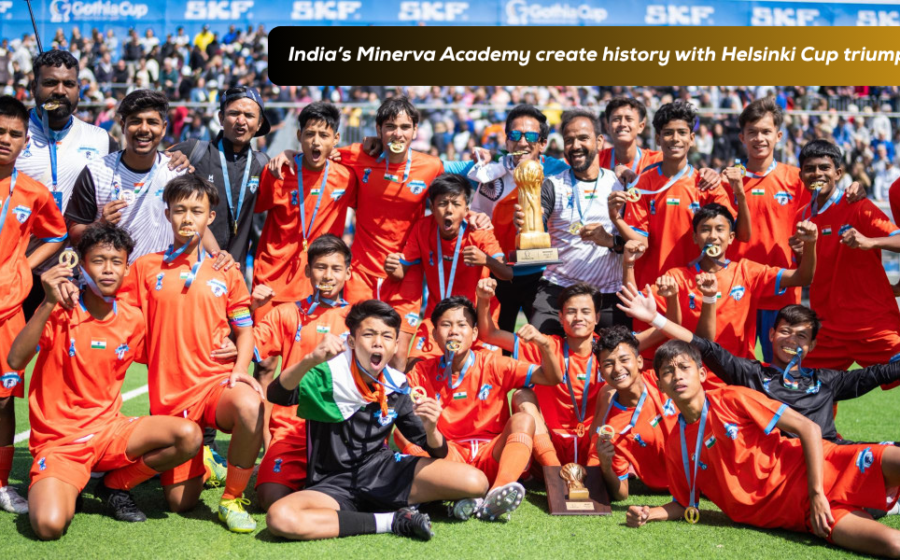
India’s Minerva Academy Win Historic Helsinki Cup 2026
Introduction
When the final whistle pierced the Nordic evening air in July 2026, it didn’t just signal a victory in a youth football tournament; it announced a paradigm shift for Indian football. Minerva Academy’s hard-fought 1-0 win over tournament hosts and defending champions HJK Helsinki in the Minerva Academy Helsinki Cup Triumph etched an unforgettable chapter in the country’s sporting history.
For a nation historically starved of elite international silverware on foreign soil, conquering a premier European youth competition represents far more than temporary jubilation. It shatters the glass ceiling of perception. It proves that with scientific athletic preparation, intelligent tactical application, and unyielding psychological resolve, Indian youngsters can go toe-to-toe with the finest talent factories in Europe and emerge victorious.
Match Overview
- Tournament: Helsinki Cup 2026
- Venue: Helsinki, Finland
- Date: July 10, 2026
- Final Score: HJK Helsinki 0–1 Minerva Academy FC
- Opponent: HJK Helsinki (Defending Champions)
- Goal Scorer(s): Rimoson (37′)
- Match Summary: A high-intensity, fiercely tactical final where Minerva controlled the tempo and neutralized the home side’s threat before Rimoson struck a clinical winner in the 37th minute to secure the historic trophy.
First Half Analysis
The opening forty minutes unfolded as a high-stakes tactical chess match. Minerva deployed a fluid 4-3-3 shape, prioritizing central midfield compactness to deny HJK’s playmakers time on the turn. Possession was intensely contested; the Finnish side attempted to stretch the pitch using lateral switches, but Minerva’s aggressive mid-block forced hurried long balls.
Instead of sitting deep in fear, the Indian youngsters maintained a proactive pressing trigger whenever the ball entered their defensive third. While clear sights at goal were at a premium, Minerva’s disciplined shifting and proactive defensive line ensured the hosts were restricted to speculative efforts from distance.
Second Half Analysis
The second stanza required supreme mental fortitude. Having broken the deadlock in the 37th minute through Rimoson’s composed finish, Minerva faced an inevitable onslaught from the defending champions.
The technical staff introduced disciplined defensive substitutions, pulling lines tighter and cutting off the half-spaces that HJK tried to exploit through central overloads. Game management became the operative phrase: intelligent tactical fouling, calming possession sequences in the opposition half, and heroic last-ditch clearances preserved the fragile lead until the referee signaled full-time.
Tactical Breakdown
Minerva’s tactical identity centers on athletic high-intensity transitions and positional discipline. Their 4-3-3 structure morphs seamlessly into a compact 4-5-1 out of possession, denying central penetration. The midfield triangle operated with rhythmic synchronicity, recycling possession cleanly rather than forcing rushed vertical balls.
When winning back possession in wide areas, rapid vertical combinations exploited the vacant spaces left by HJK’s advanced fullbacks. Crucially, defensive set-piece organization was immaculate, neutralizing the physical height advantage traditionally held by Nordic opponents.
Standout Performers
Rimoson
The match-winner delivered when the stakes reached boiling point. His 37th-minute strike showcased elite spatial awareness and ice-cold composure inside the penalty box, turning a half-chance into eternal glory.
Paikhomba
Operating at the base of midfield, he was the defensive anchor and metronome. His interceptions broke up HJK’s rhythm, and his clean distribution under pressure allowed Minerva to transition from defense to attack smoothly.
Haokip
A towering defensive performance. He commanded the penalty area with authority, winning crucial aerial duels and stepping out of the backline to intercept dangerous through-balls.
The Goalkeeper
Flawless under the high-ball barrage of the second half. His handling during chaotic goalmouth scrambles and sharp positional awareness kept the clean sheet intact.
Yohenba
The energetic forward stretched the opposition backline all afternoon. His relentless pressing from the front forced HJK into unforced errors during build-up phases.
T. Kipgen
Although quieted in the final due to intense marking, his earlier tournament-leading performances laid the psychological foundation for the entire squad’s attacking confidence.
Turning Points of the Match
The defining pivot arrived in the 37th minute when Rimoson latched onto a swift transition, holding off his marker before slotting past the onrushing keeper. Another vital turning point occurred midway through the second half, when the goalkeeper tipped a goal-bound header over the crossbar with an acrobatic reflex save. These moments transformed pressure into belief.
Minerva Academy’s Journey
Minerva’s ascent has been built on an uncompromising philosophy of international exposure. Rather than hiding within domestic boundaries, the academy regularly tests its wards in grueling European competitions—from thrashing Liverpool’s youth side at the MICFootball tournament in Spain to historic triumphs at the Norway Cup and Dana Cup. This relentless exposure creates a culture where facing European giants induces excitement rather than intimidation.
Expert Analysis
What separated Minerva from HJK was tactical clarity and emotional control. While HJK possessed physical prowess, Minerva utilized superior positional rotation and quick combinations to bypass the press. The tactical discipline to maintain a low block without panicking under late-game pressure was the ultimate differentiator. Indian football must learn that competitive fearlessness is forged through continuous, high-level international calibration.
Final Thoughts
The Helsinki Cup triumph is a monumental watershed moment for Indian youth development. It proves that our young players possess the talent, grit, and tactical intelligence to conquer Europe’s elite. If nurtured with continuity and vision, this generation could fundamentally alter the trajectory of Indian football for decades to come.