F1’s New Manufacturers in 2026: Audi, Cadillac and the Engine Shake-Up
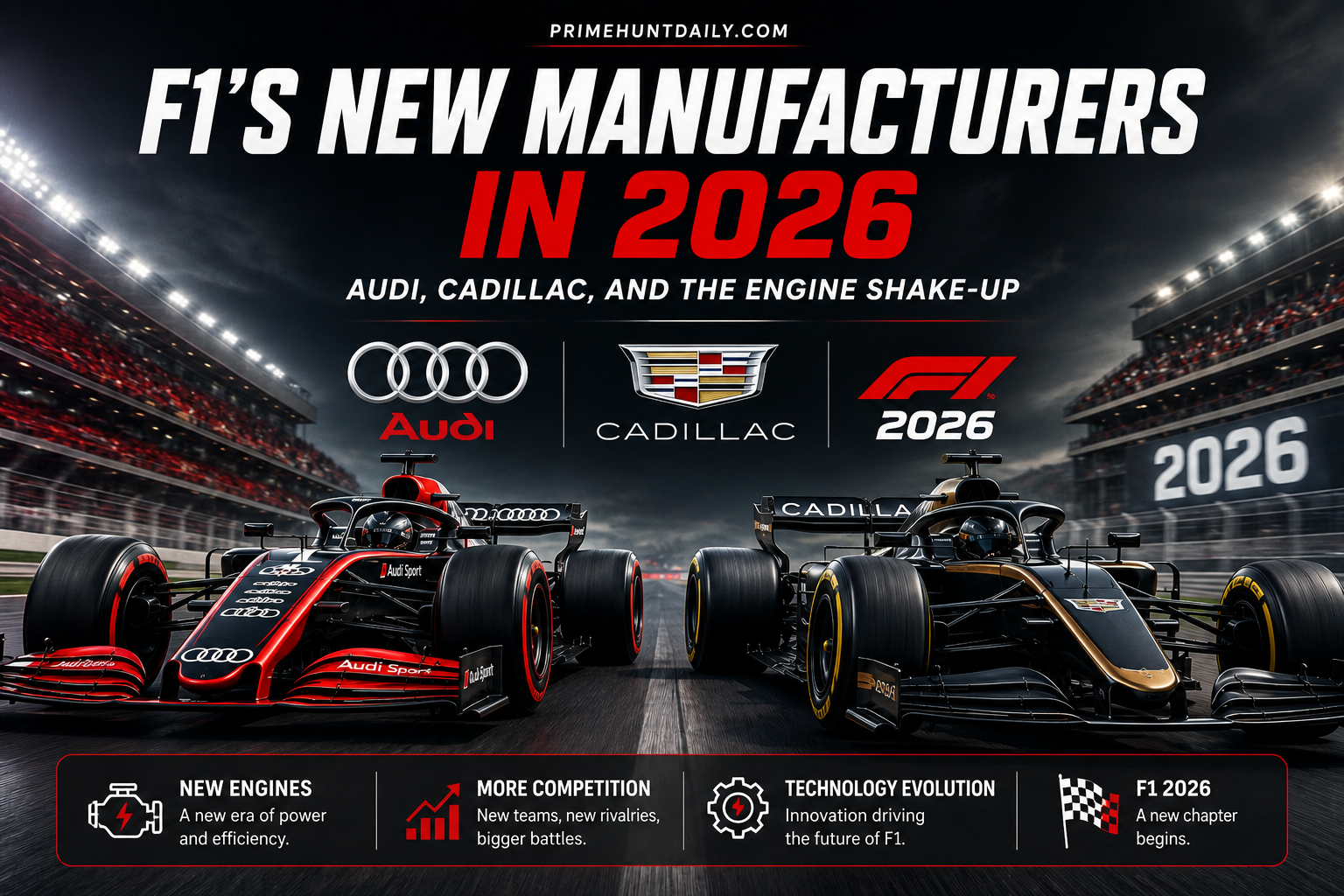
F1 2026 Explained | New Teams and Manufacturers Guide
Introduction
Formula 1’s 2026 regulation reset didn’t just change how the cars work — it changed who’s building them. Audi arrived as a full works manufacturer, Cadillac became the grid’s first new team in a decade, and the engine supplier landscape shuffled dramatically with Ford, Honda, and Renault all changing roles. Here’s a complete guide to every new manufacturer story shaping the season.
New Manufacturers at a Glance
| Manufacturer | 2026 Status |
| Audi | New works team (formerly Kick Sauber, using Ferrari engines through 2025) |
| Cadillac | 11th team on the grid; first new team since Haas (2016); uses Ferrari power units initially |
| Ford | Returned as an engine supplier, partnered with Red Bull Powertrains |
| Honda | Returned as a fully independent supplier, now partnered with Aston Martin |
| Renault | Exited as an engine supplier; Alpine now a Mercedes customer team |
Audi: A Century-Old Name, A New Formula 1 Chapter
Audi’s arrival as a full works team marks the manufacturer’s first Formula 1 presence, though its predecessor company Auto Union competed in Grand Prix racing before the Second World War, predating the official World Championship’s 1950 inception. Audi purchased the Sauber team outright in 2024 and competed under the Kick Sauber name through the 2024 and 2025 seasons using Ferrari engines, before completing the transition to a fully-fledged Audi factory operation for 2026 — engine and all.
Cadillac: The Grid’s Newest Team
Cadillac’s arrival as the eleventh team on the grid ends a ten-year wait since Haas last joined the championship in 2016. The team’s route to the grid wasn’t straightforward — an earlier attempt to enter in partnership with Andretti Global did not succeed — but Cadillac has now established itself with a driver line-up combining the experienced Sergio Pérez and Valtteri Bottas. For now, the team runs Ferrari power units and gearboxes as a customer operation, but Cadillac’s parent company General Motors has an FIA-approved plan to introduce its own in-house power unit, developed in collaboration with TWG Motorsports, from the 2029 season.
The Engine Supplier Shuffle
Beyond the two new teams, 2026’s regulation reset triggered significant movement among engine suppliers. Ford returned to Formula 1 for the first time since 2004 — when it last supplied its former customer team Jordan — this time via a partnership with Red Bull Powertrains, covering both Red Bull Racing and sister team Racing Bulls. Honda, meanwhile, made its own return as a fully independent supplier for the first time since partially withdrawing from the sport in 2021, splitting away from its long-standing Red Bull relationship to instead partner Aston Martin.
Renault’s departure closes out the other side of the story. After years of results that failed to match the ambitions of the hybrid era, Renault ceased supplying engines to Alpine from 2026 — the first season without Renault power in the championship since 2000. Alpine has instead become a customer team, running Mercedes engines and gearboxes, a reversal of the works-team status the Enstone-based operation held continuously since Renault reacquired the team ahead of 2016.
Key Talking Points
- A genuinely reshaped grid. With two new teams and three manufacturers changing roles, 2026 features more structural change than any season in recent memory.
- Cadillac’s long-term power unit plan. Running Ferrari engines now but building toward a GM in-house unit by 2029 gives Cadillac a clear, if gradual, path to full manufacturer status.
- Ford and Honda, back but different. Both American and Japanese manufacturers returned to the sport, but in a reshuffled partnership pattern that split Honda from Red Bull and brought Ford in as the new Red Bull Powertrains partner.
- The end of an era for Renault. The French manufacturer’s exit as an engine supplier closes a chapter stretching back to 2000, with Alpine’s new customer status marking a significant shift in the team’s identity.
Conclusion
The scale of manufacturer change in 2026 reflects just how significant this regulation cycle was always intended to be. Audi and Cadillac give the grid two genuinely new stories to follow, while the supplier reshuffle among Ford, Honda, and Renault adds fresh context to how teams like Red Bull, Aston Martin, and Alpine are performing. With Cadillac’s own power unit still three years away and Audi still finding its feet as a full works operation, both new manufacturers’ longer-term trajectories remain very much a story in progress.