A Disrupted F1 2026: Bahrain and Saudi GPs Cancelled, Imola Dropped for Madrid — How the Calendar Was Reshaped
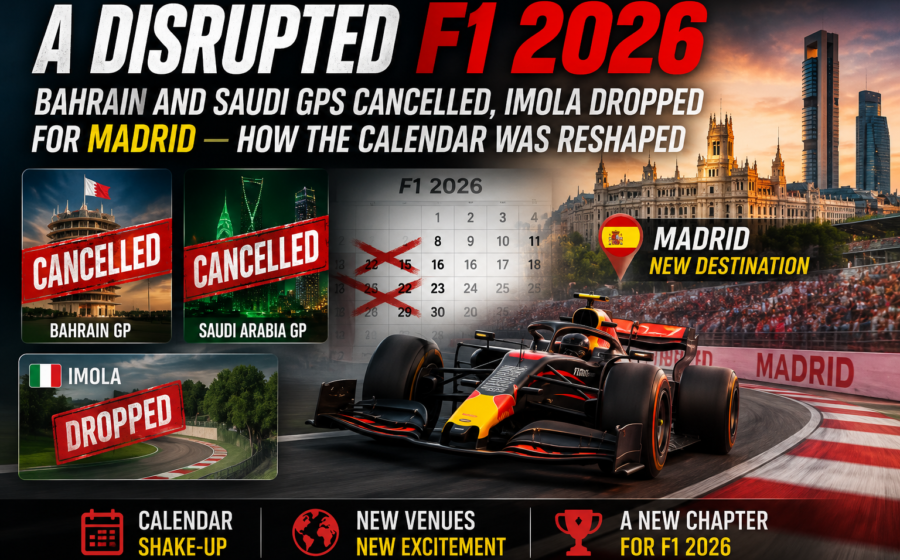
The 2026 Formula 1 season has been one of the most disrupted in recent memory off the track as well as on it. A combination of geopolitical events and long-planned calendar changes has reshaped the schedule significantly, cutting the campaign down from the 24 races originally planned to just 22. Here’s what changed, and why.
Bahrain and Saudi Arabia cancelled
The most significant disruptions came in the Middle East. Both the Bahrain Grand Prix and the Saudi Arabian Grand Prix — which had been scheduled for 12 and 19 April respectively — were called off amid the conflict in the region. With no immediate replacements announced, the cancellations left an early-season gap and reduced the number of events on the calendar.
For two races that have become fixtures of the modern F1 calendar — Bahrain as a traditional season-opener and Saudi Arabia’s high-speed Jeddah street circuit — the absences have been keenly felt, both sportingly and commercially.
Imola makes way for Madrid
Separate from the cancellations, one of the sport’s most iconic venues was dropped as part of a planned rotation. The Emilia-Romagna Grand Prix at Imola — a circuit steeped in history — did not feature on the 2026 calendar, making way for a new addition: Madrid will make its F1 debut on the weekend of 11-13 September, becoming the second Spanish race on the calendar alongside Barcelona.
The arrival of Madrid reflects F1’s continued push toward new, purpose-built and city-based venues, even as it means saying goodbye — at least for now — to a beloved classic like Imola.
What it means for the season
A 22-race season is still a demanding one, but the reshuffle has altered the rhythm of the championship. The early-season Middle East double-header that traditionally sets the tone was missing, changing how teams and drivers built their momentum. For a title race currently led commandingly by Mercedes’ Kimi Antonelli, every calendar quirk matters — fewer races means fewer opportunities for chasing rivals to claw back ground.
Looking ahead
With the calendar now settled at 22 rounds, attention returns to the racing, with the Hungarian Grand Prix next up on 26 July and Madrid’s much-anticipated debut to come in September. F1’s ability to adapt its schedule around global events has been tested this year — and the sport has, as ever, found a way to keep the show on the road.
Prime Hunt Daily brings you the latest Formula 1 calendar news, race results and championship analysis.