India Women Enter T20 World Cup With Strong Warm-Up Form
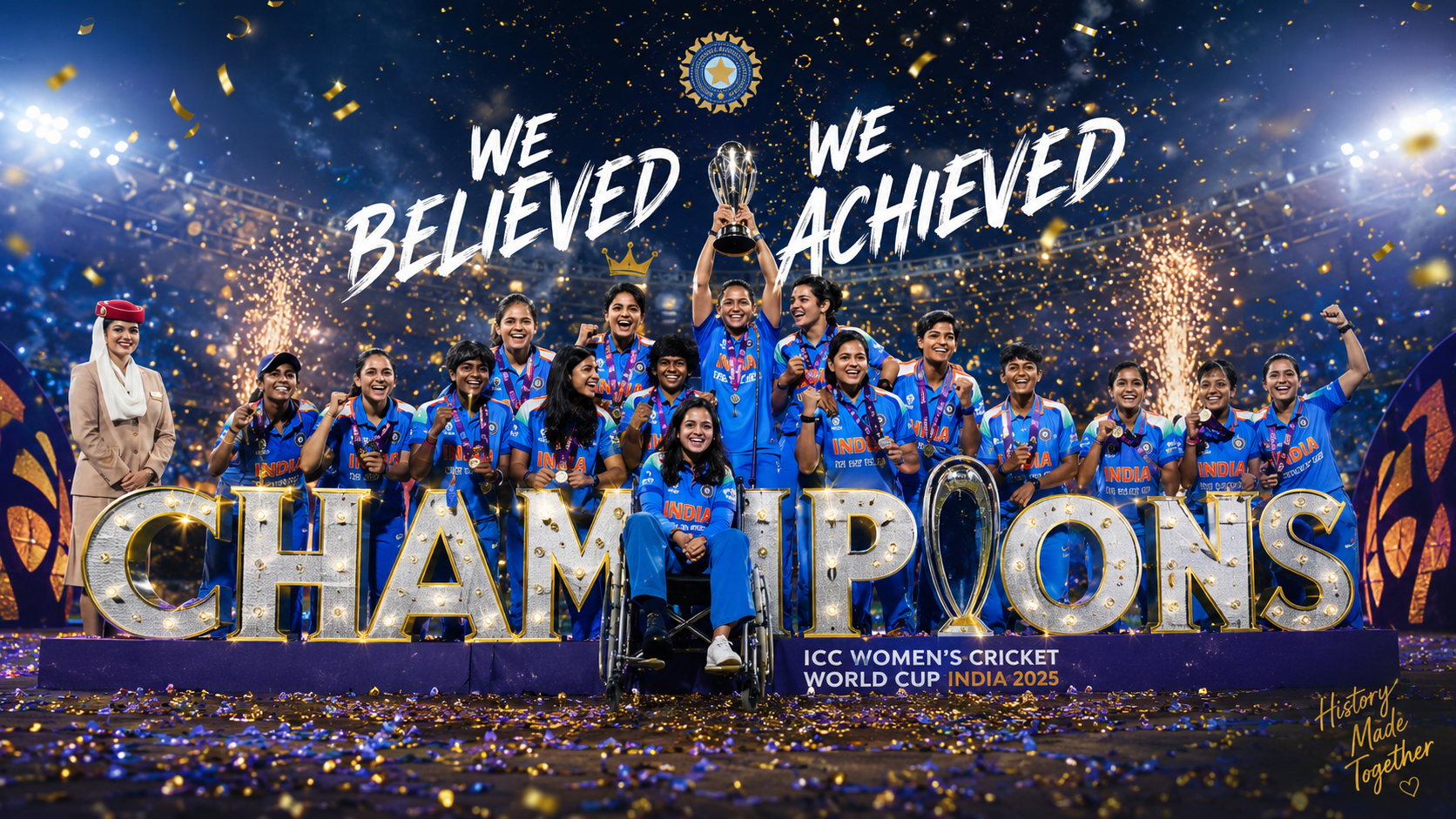
As the global landscape of cricket shifts its focus toward the historic pitches of England and Wales, the India Women’s cricket team finds itself on the precipice of a definitive moment. Entering the Women’s T20 World Cup 2026, the quest for an elusive maiden ICC senior title carries a renewed sense of purpose and structure. Historically, tournaments of this magnitude are won not just by absolute talent, but by tactical clarity and momentum established before the opening group fixture.
India’s recent dress rehearsals in Cardiff have provided exactly that type of launchpad. Through contrasting warm-up fixtures—a dominant, comprehensive victory against the West Indies followed by an agonizingly close, high-octane pursuit against tournament hosts England—the side has demonstrated a sharp, competitive edge. Expectations surrounding this contingent are exceptionally balanced. Unlike previous cycles where individual reliance dictated outcomes, this squad displays a deeper collective identity, entering the main event with key personnel finding peak form precisely when it matters most.
India Women’s Impressive Warm-Up Campaign
India’s warm-up itinerary at Sophia Gardens provided an ideal calibration of tactical experimentation and genuine match intensity. In their opening encounter against the West Indies, India exhibited robust squad depth. Batting first, the team overcame a mid-innings wobble triggered by Afy Fletcher’s clever leg-spin to post a commanding $179/8$. The cornerstone of that total was a fluent, unbeaten $56$ from Bharti Fulmali, stepping into the middle order with poise. India’s defense of the target was clinical, orchestrated entirely by a multi-layered spin attack. Shreyanka Patil ($4/36$) and Radha Yadav ($3/25$) weaponized the damp Welsh conditions, systematically dismantling the Caribbean batting unit to secure a comprehensive 26-run victory.
India Women vs West Indies Women (Warm-up Match 1)
IND-W: 179/8 (20 overs) | WI-W: 153/8 (20 overs)
Result: India Women won by 26 runs.
The second fixture against a powerhouse England unit tested India’s resolve under intense pressure. Bowling first on a used surface that offered variable bounce, the Indian attack faced a formidable 70-run partnership between Amy Jones ($64$) and Nat Sciver-Brunt ($57$). Despite a late-innings assault from Dani Gibson that propelled England to $171/6$, Shreyanka Patil again stood out with an economical $2/29$.
The ensuing run chase began in disastrous fashion, with both openers departing within the first three overs, leaving India stumbling at $64/4$ after 10 overs. What followed, however, was a masterclass in counter-attacking batsmanship. Richa Ghosh played a sensational, lone-wolf innings of 68$ from just $36$ balls, striking nine boundaries and two sixes. She dragged India single-handedly to the absolute brink of an improbable win, needing just six runs from the final three balls before being stumped while hunting another maximum. Though India fell short by a mere five runs, finishing at $166$ all out, the match solidified their status as a resilient chasing unit capable of handling elite bowling.
India Women vs England Women (Warm-up Match 2)
ENG-W: 171/6 (20 overs) | IND-W: 166/10 (19.5 overs)
Result: England Women won by 5 runs.
Key Players Hitting Form At The Right Time
Harmanpreet Kaur
The skipper remains the emotional and tactical anchor of the middle order. While she was rested during the opening match against the West Indies to allow team exploration, her brief stay of $17$ against England showed sharp defensive stability and intent before an uncharacteristic miscue. Her primary value lies in navigating the crucial middle overs ($7$ to $15$), where her sweeping ability against elite finger spinners will dictate India’s tempo.
Smriti Mandhana
Elegance personified at the top, Mandhana’s preparation has been mixed but vital. In the first warm-up, she wore the captain’s armband and contributed a brisk, anchoring $23$ off $19$ balls to set up the Powerplay platform. Although dismissed for a solitary run against England via a phenomenal diving catch by Tilly Corteen-Coleman, her status as India’s premier volume scorer means her tactical approach against the swinging new ball will decide India’s Powerplay efficiency.
Shafali Verma
The young, explosive opener is actively evolving into a genuine two-dimensional cricketer. Known primarily for her uninhibited ball-striking at the top, Shafali showed glimpses of that power with a rapid $13$ off $6$ balls against England. Crucially, her off-spin is fast becoming a legitimate match-up weapon for Kaur; she bowled a tight spell against England, dismissing the dangerous Amy Jones with a delivery that skidded low into the woodwork.
Richa Ghosh
Richa’s breathtaking $68$ in Cardiff is arguably the single biggest positive of India’s entire warm-up phase. Entering the crease with the required run rate climbing past ten an over and the top tier back in the dugout, her composure under duress was elite. Her innate ability to clear boundary ropes square of the wicket and down the ground provides India with the exact death-overs finisher they have historically lacked.
Deepti Sharma
The tactical glue of India’s playing XI, Deepti’s subtle variations remain indispensable. While the warm-up scorecards did not see her among the primary wickets, her primary function is containment and tactical flexibility. Capable of bowling in the Powerplay, squeezed middle overs, or at the death, her variations on English surfaces will dictate how much scoreboard pressure India can exert.
What India’s Warm-Up Form Reveals
A forensic look at the warm-up data exposes a clear tactical shift in India’s modern T20 template. In the Powerplay, there is a clear directive to maximize the fielding restrictions, even if it risks early wickets. The team cruised to $59/0$ against the West Indies, displaying an aggressive intent that sets a modern tone.
The middle-order stability shows structural resilience. Even when structural collapses occurred—such as losing three wickets for 26 runs against the Windies or slipping to a precarious $64/4$ against England—the engine room did not stall. Contributions from squad players like Yastika Bhatia and Bharti Fulmali mean India are no longer fragile if the opening pair fails early.
India’s Warm-up Spin Dominance:
Patil & Yadav combined for 7 wickets vs West Indies, proving that finger and mystery spin remains India’s primary defensive weapon on drying UK tracks.
The spin attack is undeniably world-class. Shreyanka Patil’s collective six wickets across two matches highlight her rapid ascent as a premiere wicket-taking option who bowls with remarkable drift and dip. Paired with Radha Yadav’s flat, metronomic left-arm spin, India possesses the tools to choke teams in the middle phases.
Team Combination And Selection Decisions
The performances in Cardiff have created healthy selection headaches for the team management ahead of the tournament opener against Pakistan. The most prominent talking point is the inclusion of Bharti Fulmali, whose stellar unbeaten half-century proved she possesses the temperament for high-pressure scenarios.
Probable Playing XI
- Smriti Mandhana (vc)
- Shafali Verma
- Yastika Bhatia / Jemimah Rodrigues
- Harmanpreet Kaur (c)
- Richa Ghosh (wk)
- Bharti Fulmali
- Deepti Sharma
- Shreyanka Patil
- Radha Yadav
- Arundhati Reddy
- Renuka Singh Thakur
Tactically, India will likely favor a heavy spin-and-all-round balance. With Deepti, Shreyanka, and Radha operating as front-line options, supplemented by Shafali’s handy off-spin, India can comfortably field three specialized spinners. This leaves Renuka Singh Thakur to lead the pace attack with the new ball, looking for early movement in the English summer humidity, while Arundhati Reddy or a secondary pace-bowling all-rounder fills the middle overs.
Biggest Positives Ahead Of The World Cup
The overarching positive emerging from the warm-up leg is a profound sense of team chemistry and clear behavioral role clarity. There is no visible panic when premium wickets fall. The fact that the lower-middle order consistently rallied to post or chase down large totals speaks volumes about the mental conditioning of this group.
Furthermore, the leadership core looks incredibly settled. Harmanpreet Kaur’s extensive tournament experience, combined with Mandhana’s tactical support, ensures that field placements and bowling rotations remain highly proactive. The narrow five-run defeat to England will not dampen spirits; if anything, it has provided a priceless lesson in high-stress execution without damaging their tournament points tally.
Areas India Still Need To Improve
While the baseline form is strong, cold analytical reality dictates that certain deficiencies must be ironed out immediately if India intends to upstage teams like women’s T20 World Cup favorites Australia or England.
- Fielding Standards: Drop catches and slight lapses in outfield boundary clean-ups allowed England to turn a projected $155$ total into $171$. In knockout cricket, these lapses are fatal.
- Death Overs Execution: The fast bowlers must establish a more consistent method—whether through wide yorkers or slower-ball bouncers—to prevent lower-order hitters from hijacking momentum in the final 18 balls of an innings.
- Top-Order Consistency: Relying on spectacular rescue acts from the likes of Richa Ghosh is high-variance. The top three must take ownership of batting deep into the innings.
Main Rivals For The Trophy
Australia
The undisputed benchmark of modern cricket. Packed with supreme athletes, serial winners, and unparalleled depth, their tactical blueprint relies on an endless stream of multi-dimensional all-rounders who can win games from any position.
England
Playing in home conditions, Heather Knight’s side looks lethal. Their warm-up victory over India showcased their tactical depth, with a balanced batting lineup and an elite spin department anchored by Sophie Ecclestone.
New Zealand
The reigning champions are a seasoned, gritty unit that thrives in tournament tournament structures. Backed by world-class leaders, they possess an inherent capability to execute highly specific defensive match-ups.
South Africa
Boasting pure, raw athletic power and an elite frontline pace battery, the Proteas are entirely capable of dismantling any batting order on a given day if the surface offers any assistance.
Players To Watch During The Tournament
| Player | Team | Primary Role | Expected Tournament Impact |
| Harmanpreet Kaur | India | Middle-order Batter / Captain | The absolute spine of India’s batting; her tactical execution against spin defines the team’s middle-overs momentum. |
| Smriti Mandhana | India | Opening Batter | Elite stroke-maker responsible for maximizing Powerplay field restrictions and anchoring long chases. |
| Nat Sciver-Brunt | England | Fast-bowling All-rounder | A supreme match-winner with both bat and ball who consistently delivers her finest performances in knockout fixtures. |
| Ellyse Perry | Australia | All-rounder | A legendary veteran whose wealth of experience and calm head under pressure stabilizes the middle-order. |
| Amelia Kerr | New Zealand | Leg-spinning All-rounder | A masterful, high-skill package whose subtle variations with the ball and technical class with the bat anchor the Kiwis. |
| Laura Wolvaardt | South Africa | Opening Batter / Captain | Possesses arguably the most elegant cover drive in the game; can single-handedly anchor an entire innings at a high tempo. |
Key Facts Table
| Attribute | Tournament Specification |
| Warm-up Record | Played 2, Won 1, Lost 1 |
| Top Warm-up Performers | Richa Ghosh ($68$ vs ENG), Bharti Fulmali ($56^*$ vs WI), Shreyanka Patil (6 total wickets) |
| Captain | Harmanpreet Kaur |
| Tournament Group | Group A |
| Opening Match | vs Pakistan (Edgbaston, June 14) |
| Major Strengths | Elite multi-layered spin department, dynamic lower-order finishing depth |
Frequently Asked Questions (FAQs)
Q.1 How did India perform in the warm-up matches?
India secured a highly encouraging 26-run victory over the West Indies before falling just five runs short in an absolute thriller against England.
Q.2 Who impressed the most during India’s warm-ups?
Wicketkeeper-batter Richa Ghosh starred with an explosive 68$ off 36$ balls, while young off-spinner Shreyanka Patil led the bowling chart with six wickets across two appearances.
Q.3 Who are India’s key players for the T20 World Cup?
The core engine consists of captain Harmanpreet Kaur, dynamic opener Smriti Mandhana, finisher Richa Ghosh, and premier all-rounder Deepti Sharma.
Q.4 Can India win the Women’s T20 World Cup 2026?
Yes. India are considered strong title contenders due to a world-class spin unit and vastly improved lower-order batting depth.
Q.5 Which teams are India’s biggest rivals in the tournament?
Six-time champions Australia and hosts England loom as the primary obstacles standing in India’s way.
Q.6 When is India’s first official match in the World Cup?
India opens its campaign in a high-stakes group match against arch-rivals Pakistan on Sunday, June 14, at Edgbaston.
Conclusion
The preparatory phase is officially over, and the data paints an encouraging picture for the Indian camp. Through tactical experiments, sparkling individual displays, and a collective refusal to back down under immense pressure, India has shown they are primed for the big stage.
While small operational areas like death-overs bowling execution require immediate tightening, the sheer match-winning capability running through this squad is undeniable. As they take the field at Edgbaston, this group does not carry the weight of past near-misses; instead, they carry the sharp, clinical edge of a team that knows its finest hour is well within reach.