In the high-stakes world of Formula 1, perception and reality are often two very different things. Nowhere is this more apparent today than at Red Bull Racing. As the 2026 season unfolds, the Milton Keynes-based squad finds itself at the center of an unexpected controversy involving the FIA’s new Additional Development and Upgrade Opportunities (ADUO) system. While Red Bull’s chassis may be struggling to match the dominant pace of Mercedes, a recent FIA technical assessment has placed them in a paradoxical position: they have been officially pegged as the benchmark for engine performance, effectively locking them out of vital development concessions.
For a team currently chasing the leaders, this “compliment” from the FIA is anything but welcome. It has left the team, and many in the paddock, questioning the metrics used to judge power unit parity. As the dust settles on the Monaco Grand Prix, we analyze how this ruling has left Red Bull feeling powerless in their bid to catch up, and what it means for the remainder of the 2026 championship.
What Was the FIA Decision?
The controversy stems from the FIA’s introduction of the ADUO system for the 2026 season. Designed as a “safety net” to maintain competitive balance, ADUO allows power unit manufacturers (PUMs) to introduce performance upgrades if their engine is found to be significantly lagging behind the best-performing unit on the grid.
The criteria are strictly defined:
- 2% to 4% Deficit: Eligible for one homologation upgrade in the current season and one in the following season.
- Over 4% Deficit: Eligible for two homologation upgrades in the current season.
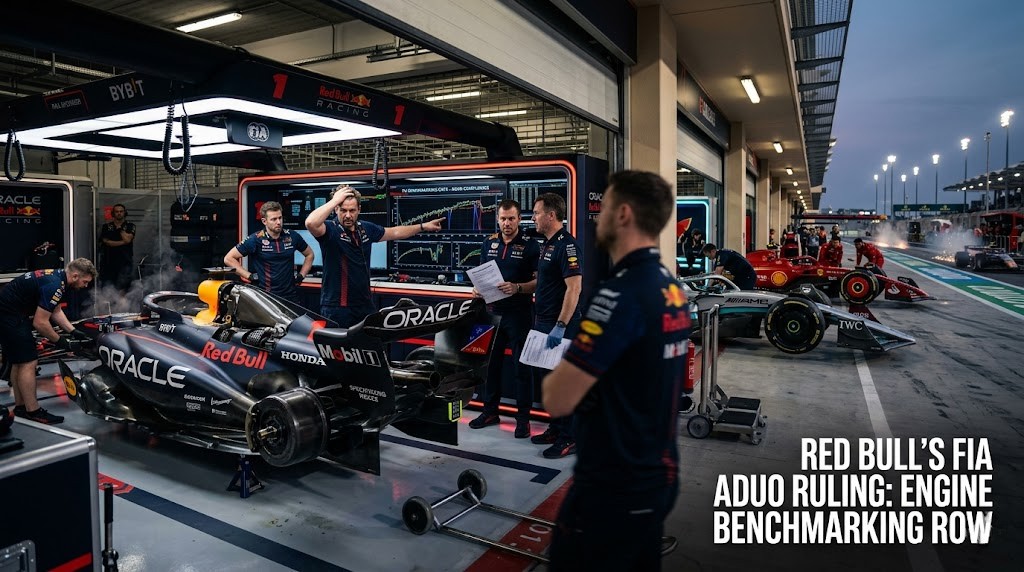
During the Monaco Grand Prix weekend, the FIA shared its initial evaluation of these engines based on data from the first five races. To the surprise of many, the Red Bull Powertrains (RBPT) DM01 engine was identified as the benchmark. Consequently, Red Bull is ineligible for any development upgrades, while its rivals—most notably Mercedes, Ferrari, Audi, and Honda—have all been granted various degrees of upgrade allowances.
Why the Ruling Matters: Technical and Sporting Implications
The core of the issue lies in what the FIA is measuring. The ADUO benchmarking process currently focuses exclusively on the Internal Combustion Engine (ICE) performance, intentionally ignoring the electrical and hybrid components of the power unit.
This narrow focus has become a major flashpoint. While the Red Bull ICE may be performing at an elite level, the team’s struggles on track—where they have been significantly outperformed by Mercedes—suggest that their overall power unit package (chassis integration and energy management included) is not delivering race-winning results. By excluding the hybrid system from the ADUO calculations, the FIA has essentially created a measurement system that does not reflect real-world on-track performance.
How Red Bull Could Be Affected
For Red Bull Racing, the sporting consequences are severe. In the ultra-competitive landscape of 2026, an engine freeze is a massive disadvantage. If a team is stuck with its current engine specification while others are permitted to iterate and improve, the performance gap can only widen.
The team now faces a difficult reality:
- Development Stagnation: While Mercedes and Ferrari bring upgrades to their power units, Red Bull must rely solely on chassis and aerodynamic refinements.
- Championship Pressure: With Max Verstappen already trailing in the standings, the inability to optimize the power unit is a major blow to his championship ambitions.
- Strategic Constraints: Every race weekend now becomes an uphill battle against competitors who are actively increasing their power output.
Reactions from Red Bull and Their Rivals
The mood within the Red Bull camp is one of frustration. Although the team has been publicly reserved, reports indicate that the organization was blindsided by the FIA’s findings. Red Bull has formally challenged the results, seeking clarity on the data and the methodology behind the benchmarking.
In response, the FIA has reportedly agreed to a review of the data from the opening five races, including an analysis of power sensor outputs. However, there is no guarantee that the status quo will change.
Meanwhile, the response from rival teams has been predictably pragmatic. Mercedes and Ferrari are keen to utilize the concessions granted to them. For these teams, the ADUO system is functioning exactly as intended—providing a path to close the gap on the benchmark.
Expert Technical Analysis: The ADUO Paradox
To understand why this ruling is so controversial, we must look at the constraints of modern F1. The 2026 regulations shifted toward a 50/50 split between ICE and electrical output. However, the FIA’s decision to measure only the ICE performance creates a distorted picture.
If a manufacturer has prioritized a different turbo design or exhaust geometry to suit their packaging—factors that may not result in higher peak ICE power but offer better driveability or reliability—they are effectively being penalized by a benchmark that only counts combustion output. This is the crux of the frustration: Red Bull may have built a powerful combustion engine, but the sport requires a complete, efficient power unit. By ignoring the hybrid elements, the FIA has arguably misidentified the true performance hierarchy of the field.
Historical Context: Rule Changes and Controversies
F1 is no stranger to technical directives that stir the pot. History is littered with examples where FIA intervention changed the championship narrative:
- Flexible Wings: Multiple technical directives over the years have targeted aero elasticity to curb performance gains.
- Porpoising Regulations: In 2022, the FIA introduced floor height regulations to address safety concerns, which fundamentally altered the competitive order.
- Cost Cap: The most recent paradigm shift, which has forced teams to be more efficient than ever before.
The ADUO system is meant to be a more clinical, data-driven approach than those historical controversies, but as we are seeing in 2026, data can be interpreted in many ways.
Impact on Max Verstappen and the Title Race
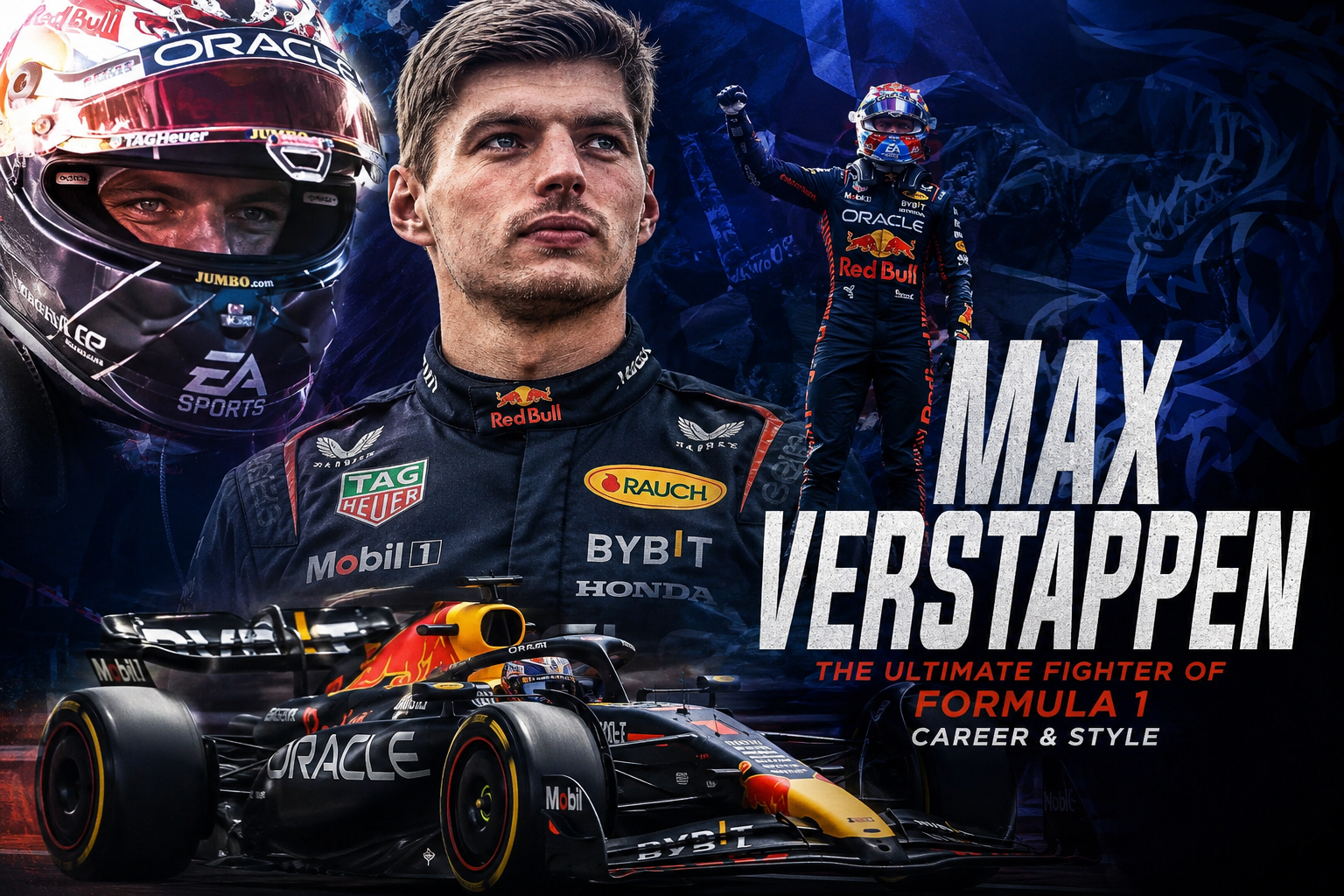
Max Verstappen has been vocal about his dissatisfaction with the 2026 regulations, often describing the cars as “Formula E on steroids” due to the heavy energy management required. Being hit with a power unit development freeze is a significant setback for a driver who is already struggling with a car that lacks pace and reliability. If Red Bull cannot find a way to circumvent this, or if the FIA’s review does not yield a change in status, Verstappen’s path to a sixth world title looks increasingly narrow.
Key Facts: The 2026 ADUO Situation
| Aspect | Detail |
| FIA Ruling | Red Bull Powertrains named benchmark PUM |
| Primary Metric | Internal Combustion Engine (ICE) output |
| Restriction | Red Bull ineligible for upgrades |
| Beneficiaries | Mercedes (1 upgrade), Ferrari/Audi/Honda (2 upgrades) |
| Status | Data under review following Red Bull protest |
Conclusion: The Path Forward
The FIA finds itself in a precarious position. The ADUO system was intended to be a safety net to prevent runaway dominance, yet it has inadvertently created a “punishment” for a manufacturer that has achieved a strong ICE design, regardless of their overall team performance.
Whether the FIA will adjust its findings remains to be seen. However, one thing is certain: the 2026 season has been defined by rapid, often reactive rule-making. With the FIA already confirming a U-turn on engine regulations for 2027 to address energy management issues, the current season may be remembered as one of the most volatile in F1’s modern history. For Red Bull, the focus must now shift to absolute chassis perfection—because, at least for now, their engine development has been brought to a sudden, frustrating halt.
Frequently Asked Questions (FAQs)
Q.1 What is the FIA’s ADUO ruling?
The ADUO (Additional Development and Upgrade Opportunities) is a system that allows power unit manufacturers to upgrade their engines if they fall at least 2% behind the benchmark manufacturer in ICE performance.
Q.2 Why is Red Bull Racing affected?
The FIA identified Red Bull Powertrains as the benchmark manufacturer. As the benchmark, they are not eligible for any extra development or homologation upgrades.
Q.3 Can Red Bull recover from this?
Red Bull is currently challenging the data. If the FIA review finds errors in the initial assessment, Red Bull could still be granted upgrade opportunities.
Q.4 Which teams benefit the most from this ruling?
Mercedes, Ferrari, Audi, and Honda benefit, as they have been granted development concessions to close the performance gap.
Q.5 Is this ruling fair to Red Bull?
Red Bull argues it is unfair because it ignores hybrid performance and chassis-related issues, focusing only on the ICE.
Conclusion: The Road Ahead
The FIA’s initial ADUO assessment has triggered a significant controversy, highlighting the complexities—and potential pitfalls—of balancing performance in a new regulatory era. By identifying Red Bull Powertrains as the benchmark for Internal Combustion Engine (ICE) performance, the governing body has effectively frozen one of the sport’s most ambitious projects at a critical juncture in the 2026 season.