Mexico vs South Africa World Cup Match Report & Analysis
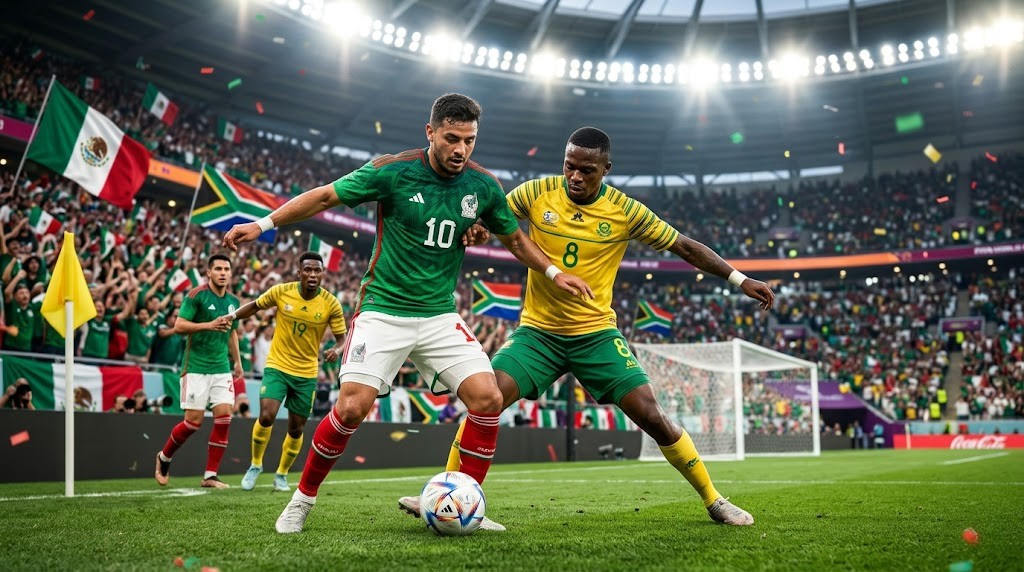
Few matches in international football carry the emotional weight and historical significance of an opening fixture of a FIFA World Cup. When host nation South Africa took to the pitch against a formidable Mexico side, the atmosphere at Soccer City in Johannesburg was nothing short of electric. Set to the relentless, buzzing soundtrack of tens of thousands of vuvuzelas, the encounter provided a breathtaking start to the global showpiece.
This highly anticipated Group A fixture delivered on every front—blistering pace, tactical intrigue, and moments of sheer individual brilliance that will be replayed for decades. Both teams understood the monumental pressure: South Africa carried the hopes of an entire continent, while Mexico aimed to assert their technical superiority and lay down a marker for the rest of the tournament.
Ultimately, the match ended in a pulsating 1-1 draw, a result that perfectly reflected the balance of play. South Africa struck first through a wonder goal that shook the stadium, but Mexico’s relentless pressure and veteran leadership ensured a share of the spoils. In this detailed match report, we analyze the tactical battles, key turning points, and standout performances from this unforgettable World Cup clash.
Match Overview
Before diving into the tactical breakdowns, here are the vital details from this historic encounter.
- Tournament: FIFA World Cup (Group A)
- Venue: Soccer City Stadium, Johannesburg
- Final Score: South Africa 1 – 1 Mexico
- Match Result: Draw
- Goalscorers: Siphiwe Tshabalala (55′) for South Africa; Rafael Márquez (79′) for Mexico
Mexico vs South Africa: How the Match Unfolded
The game was a classic tale of two halves, with momentum violently swinging back and forth as both managers tweaked their systems to gain a foothold.
First Half: Mexican Dominance and Frustration
From the opening whistle, Mexico seized control of the tempo. Playing with a high line and aggressive pressing, El Tri pinned South Africa deep into their own half. Giovani dos Santos was a constant menace on the right flank, repeatedly cutting inside to test the South African defense. Goalkeeper Itumeleng Khune was called into action early, making a brilliant sprawling save to deny Guillermo Franco from close range.
The most controversial moment of the half came when Carlos Vela found the back of the net from a corner, only for the goal to be correctly ruled out for offside. Because Khune had stepped off his line, the South African defender on the goal line became the goalkeeper in the eyes of the offside rule, leaving Vela behind the second-to-last opponent. Despite holding the lion’s share of possession, Mexico headed into the break with nothing to show for their dominance.
Second Half: The Wonder Goal and the Equalizer
South Africa emerged from the tunnel with renewed vigor. Coach Carlos Alberto Parreira clearly instructed his side to bypass the Mexican press with quicker, more direct transitions. This adjustment paid off spectacularly in the 55th minute. Following a rapid counter-attack, Kagisho Dikgacoi threaded a perfect pass to Siphiwe Tshabalala on the left wing. Without breaking stride, Tshabalala unleashed a thunderous left-footed strike into the top corner, sending the host nation into a state of absolute delirium.
Trailing 1-0, Mexico manager Javier Aguirre turned to his bench, bringing on veteran forward Cuauhtémoc Blanco and Andrés Guardado to inject urgency. The pressure mounted, and in the 79th minute, South Africa’s defensive organization finally cracked. A deep, sweeping cross found the experienced Rafael Márquez unmarked at the back post. Controlling the ball with immense composure, the Mexican captain fired past Khune to restore parity.
In the dying moments, South Africa nearly stole the victory when Katlego Mphela burst onto a long ball, shrugging off a defender, only to see his agonizing shot rebound off the post.
Mexico’s Performance Analysis
Mexico entered the tournament with high expectations, and their performance showcased both their immense technical quality and their recurring vulnerabilities.
Attacking Approach & Midfield Control:
Under Javier Aguirre, Mexico utilized a fluid 4-3-3 system. Gerardo Torrado anchored the midfield, allowing fullbacks Carlos Salcido and Paul Aguilar to push aggressively forward. Giovani dos Santos was the creative hub, constantly finding pockets of space and driving at the defense. Mexico’s ability to retain the ball in tight areas was exceptional, forcing South Africa to expend massive amounts of energy chasing shadows in the first 45 minutes.
Tactical Vulnerabilities:
However, their finishing let them down. Guillermo Franco struggled to convert premium chances. Furthermore, Mexico’s insistence on playing a very high defensive line left massive spaces behind their center-backs. Against a team with raw pace, this approach was highly risky and ultimately cost them the opening goal.
South Africa’s Performance Analysis
For Bafana Bafana, overcoming the crushing weight of opening-day pressure was their first major victory.
Defensive Setup & Counterattacking Strategy:
Carlos Alberto Parreira set his team up in a disciplined 4-2-3-1 formation. Knowing they could not match Mexico’s possession statistics, South Africa relied on a low defensive block, marshaled excellently by captain Aaron Mokoena. The strategy was clear: absorb pressure, win the ball in the middle third, and launch lightning-fast counter-attacks utilizing the pace of Tshabalala and Steven Pienaar.
Areas for Improvement:
While the game plan worked perfectly for the opening goal, South Africa struggled with passing accuracy when trying to build out from the back. Too often in the first half, poor distribution handed possession straight back to El Tri, inviting relentless pressure.
Match-Winning Moments
While the match ended in a draw, several crucial interventions defined the final outcome:
- Khune’s Early Heroics: In the 2nd minute, Khune managed to block a certain goal from dos Santos. Had Mexico scored that early, the floodgates might have opened.
- The Disallowed Goal (38′): The correct offside call against Vela kept the crowd energized and prevented Mexico from translating their dominance onto the scoreboard.
- Tshabalala’s Strike (55′): A goal of technical perfection. The vision of the pass and the ferocity of the strike shifted the entire momentum of the match.
- Márquez’s Equalizer (79′): A moment of pure veteran composure. When panic might have set in for younger players, Márquez took his time, brought the ball down perfectly, and executed a clinical finish.
- Mphela hitting the post (90′): A heart-stopping moment for Mexico that could have rewritten the tournament narrative for the hosts.
Standout Players of the Match
Siphiwe Tshabalala (Man of the Match) – 8.5/10
Etched his name into footballing folklore. His goal was a masterclass in technique, but his work rate down the left flank defensively was equally vital for South Africa.
Giovani dos Santos – 8/10
Mexico’s most dangerous attacking outlet. He was unplayable in the first half, utilizing his low center of gravity to weave through the Bafana Bafana midfield.
Rafael Márquez – 8/10
The steadying presence in El Tri’s defense. He organized the backline, distributed the ball beautifully, and popped up with the crucial equalizer when his country needed him most.
Itumeleng Khune – 7.5/10
The South African goalkeeper commanded his box well and made three critical saves in the first half to keep his side in the game.
Tactical Analysis
The clash was a fascinating stylistic contrast. Mexico’s 4-3-3 relied heavily on wide overloads. Carlos Salcido essentially played as a winger, allowing Andrés Guardado (once subbed on) to tuck inside. This forced South Africa’s wingers deep into their own half to help their fullbacks.
South Africa’s 4-2-3-1 structure was designed to plug the center. Letsholonyane and Dikgacoi sat right in front of the center-backs, denying Mexico the chance to play through the middle. However, this left South Africa isolated up front. It was only when Steven Pienaar started dropping deeper to link play in the second half that Bafana Bafana began to look cohesive in transition.
Key Statistics and Match Summary
The following statistics highlight Mexico’s dominance on the ball versus South Africa’s efficient counter-attacking.
| Statistic | Mexico | South Africa |
| Possession | 58% | 42% |
| Total Shots | 14 | 9 |
| Shots on Target | 5 | 5 |
| Corners | 5 | 4 |
| Fouls Committed | 13 | 17 |
| Yellow Cards | 2 | 2 |
| Pass Accuracy | 82% | 71% |
Expert Analysis
From a critical perspective, this match exposed the tactical blueprints of both squads. Mexico proved they had the midfield technicians to dictate play against almost any opponent. However, Javier Aguirre must address their lack of a ruthless, clinical edge inside the penalty area. Creating 14 shots but relying on a center-back to score highlights a glaring lack of cutting edge from their recognized strikers.
For South Africa, Parreira’s tactical setup was vindicated. They proved they belong on the world stage. However, moving forward, Bafana Bafana must improve their ball retention. Relying entirely on counter-attacks requires immense physical exertion, a strategy that is difficult to sustain over the course of a demanding tournament.
Biggest Talking Points
- The Atmosphere: The relentless drone of the vuvuzelas became an instant, defining characteristic of the tournament, creating a uniquely challenging auditory environment for players to communicate.
- The First Goal: Tshabalala’s strike was not just a goal; it was a cultural moment, beautifully illustrating the joy and passion of African football on the global stage.
- Offside Confusion: The disallowed goal for Mexico served as a perfect educational moment for fans worldwide regarding the nuances of the offside rule when a goalkeeper is caught out of position.
Frequently Asked Questions
Q.1 Who won the Mexico vs South Africa match?
The match ended in a 1-1 draw.
Q.2 Who scored the goals in the match?
Siphiwe Tshabalala scored the opening goal for South Africa, and Rafael Márquez scored the equalizer for Mexico.
Q.3 Who was named Man of the Match?
Siphiwe Tshabalala was widely recognized as the Man of the Match for his incredible opening goal and relentless work rate.
Q.4 What does this result mean for the standings?
The draw awarded both teams one point, leaving Group A wide open ahead of the fixture between Uruguay and France.
Q.5 Which players impressed the most?
Giovani dos Santos and Rafael Márquez were the standout performers for Mexico, while Siphiwe Tshabalala and goalkeeper Itumeleng Khune shined for South Africa.
Conclusion
The Mexico vs South Africa clash was everything a FIFA World Cup opening match should be—dramatic, intense, and culturally significant. It showcased the contrasting styles of international football, blending South African flair and counter-attacking speed with Mexican technical precision and possession-based dominance. As a standalone match, it delivered unforgettable moments, headlined by Tshabalala’s spectacular strike and Márquez’s calm response. For both sides, the 1-1 draw was a fair reflection of the 90 minutes, setting the stage for a fiercely competitive Group A battle.