FIFA World Cup 2026 Officially Kicks Off Across North America
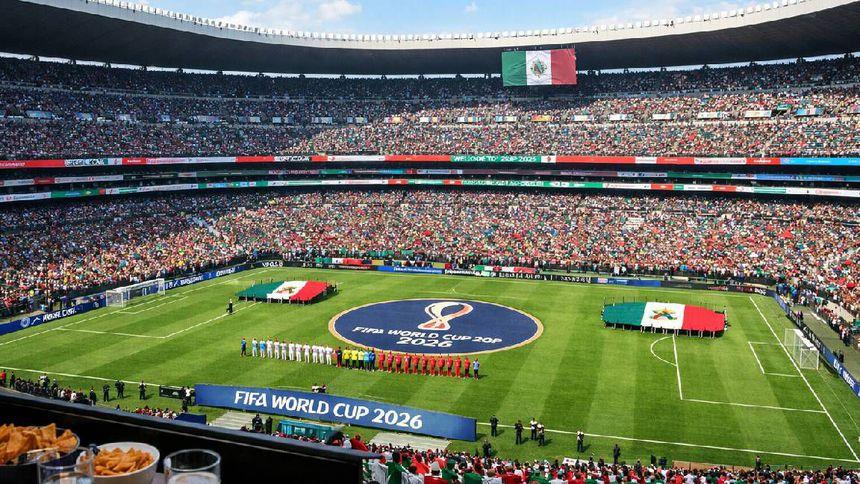
The wait is officially over. The global game has returned to its grandest stage, and this time, it is scaling heights never seen before in sporting history. The FIFA World Cup 2026 has officially kicked off, igniting a month-long celebration of football that stretches across three nations, multiple time zones, and diverse cultures.
The FIFA World Cup 2026 represents a massive paradigm shift for international football. Governed by FIFA and jointly delivered by the United States, Canada, and Mexico, this edition marks the definitive end of the 32-team architecture that shaped the tournament for a quarter of a century. Running from June 11 to July 19, 2026, the event features 48 nations competing across 16 world-class host cities.
A total of 104 matches will be played over an intense, action-packed 39-day window. This is a significant increase from the 64-game schedule utilized in previous iterations. The tournament scales across North America, utilizing existing, state-of-the-art stadiums primarily built for National Football League (NFL) and major continental sporting events.
Why This Tournament Is Historic
First World Cup Hosted by Three Countries
While the 2002 World Cup in South Korea and Japan proved that co-hosting could yield immense success, the FIFA World Cup North America project blew past previous structural boundaries. This is the first time in history that three sovereign nations have united to stage a World Cup.
The unique cultural blend of Mexico’s deep-rooted footballing passion, Canada’s surging soccer mosaic, and the unmatched commercial infrastructure of the United States creates a vibrant backdrop. Logistically, the tournament is intelligently divided into regional clusters—West, Central, and East—to mitigate extreme travel fatigue for athletes and travelling supporters alike.
Expansion to a 48-Team FIFA World Cup
The transition to a 48-team FIFA World Cup is arguably the most radical structural evolution since the tournament expanded from 24 to 32 teams for France 1998. FIFA’s decision to broaden the field directly addresses the global growth of the sport, offering historically underrepresented regions increased access to the ultimate stage.
New Tournament Format
Preserving competitive integrity while managing 48 teams required a complete reimagining of the tournament tree. FIFA ultimately locked in 12 groups of four teams each. The traditional round-robin setup remains, with each country playing three group games.
However, the real twist lies in the qualification mathematical matrix. The top two teams from each group advance automatically, but they are joined by the eight best third-placed finishers across all 12 groups.
This leads into a brand-new Round of 32 knockout phase. Consequently, elite teams can no longer coast through their final group fixtures, and a solitary, late consolidation goal for a third-placed side could mean the difference between booking flights home or marching on in the competition.
Host Countries and Major Venues
United States
The U.S. shoulders the majority of the tournament’s knockout-stage fixtures, utilizing iconic, high-capacity gridiron venues. Eleven American cities are participating: Seattle, San Francisco, Los Angeles, Kansas City, Dallas, Houston, Atlanta, Miami, Philadelphia, Boston, and New York/New Jersey.
The crown jewel of American infrastructure is the New York New Jersey Stadium (MetLife Stadium) in East Rutherford, which has been selected to host the grand final on July 19. Dallas Stadium (AT&T Stadium) in Arlington serves as another central focal point, boasting a massive capacity and cutting-edge indoor climate controls.
Canada
Canada steps into the men’s World Cup hosting spotlight for the first time, bringing two primary venues to the table: Toronto Stadium (BMO Field) and BC Place in Vancouver. Both stadiums have undergone extensive pitch modifications and capacity expansions to align with strict FIFA mandates. Vancouver’s scenic backdrop and Toronto’s incredibly diverse soccer subculture provide a distinctly northern flavor to the tournament’s overall identity.
Mexico
Mexico makes history by becoming the first country to host or co-host the FIFA World Cup on three separate occasions (1970, 1986, and 2026). Fixtures are distributed across three legendary venues: Estadio Monterrey, Estadio Guadalajara, and the mythical Mexico City Stadium (Estadio Azteca). The Azteca, a cathedral of world football that witnessed the historical peaks of Pelé and Diego Maradona, adds unmatched historical gravity to the modern tournament.
Opening Ceremony and Opening Match Details
The FIFA World Cup 2026 opening day was a sensory masterpiece, masterfully blending North American pop culture with deep-seated traditional artistry. The official World Cup 2026 opening ceremony took place at the storied Mexico City Stadium, commencing precisely two hours before kickoff. The showcase featured a spectacular mosaic of synchronized light displays, regional Mexican musical arrangements, and collaborative performances from top global artists representing all three host nations, celebrating the theme of continental unity.
Directly following the festivities, the pitch was cleared for the opening match of Group A: a highly charged encounter between host nation Mexico and South Africa.
Amid an ocean of green jerseys and a wall of deafening noise, the home side looked to replicate the emotional high of their previous historical tournament openers. The tactical battle proved intense; Mexico deployed an aggressive, high-pressing 4-3-3 system designed to exploit the wings, while South Africa countered with a low defensive block and rapid direct transitions. The match perfectly set the tone for the tournament, proving that technical nuance and high-intensity drama will be present in every single fixture.
Teams and Players to Watch
With 48 teams in the mix, the sheer volume of world-class elite talent on display is staggering. All eyes remain fixed on the established powerhouses and their generational talents:
- Kylian Mbappé (France): Now entering his absolute physical and tactical prime, the explosive forward aims to guide Les Bleus back to the pinnacle of world football with his devastating speed and clinical finishing.
- Vinícius Júnior (Brazil): The dynamic winger carries the creative hopes of the Seleção, looking to combine Samba flair with the ruthlessness needed to break down rigid European low-blocks.
- Jude Bellingham (England): The complete modern midfielder, whose late-running box entries and tactical maturity give England a robust engine room capable of dominating games.
Simultaneously, North America’s local heroes are under intense scrutiny. Christian Pulisic leads a highly motivated, European-tested United States squad, while Alphonso Davies provides world-class acceleration and defensive versatility for Canada.
We must also look to the dark horses. Emerging powers from Africa, such as a tactically disciplined Moroccan side, and resilient Asian giants like Japan, possess the squad depth and tactical discipline to comfortably orchestrate major tournament upsets.
Biggest Storylines Heading Into the Tournament
The overarching narrative of this tournament extends far beyond the tactical chalkboards. The primary talking point remains the ultimate physical endurance test: how will elite squads handle the intense travel schedules, changing time zones, and varying climates of three massive nations? A team playing a group stage game in the humid, coastal conditions of Miami might find themselves flying out to the high altitude of Mexico City or the cooler Pacific Northwest climate of Seattle just days later.
Furthermore, the introduction of the Round of 32 completely eliminates the safety net for traditional giants who are notoriously slow starters. One slip-up in the opening game turns the remaining group fixtures into high-stakes, pressure-cooker survival matches. Squad rotation, sports science optimization, and deep bench depth will be just as critical to success as individual star power.
Impact on North American Football
The long-term legacy of the tournament within the host nations will likely be felt for decades. For the United States and Canada, this event acts as a powerful catalyst for grassroots development and commercial investment. Major League Soccer (MLS) and the Canadian Premier League (CPL) are primed to capitalize on the unprecedented domestic media coverage.
In Mexico, the tournament offers a crucial opportunity to modernize stadium infrastructure and rejuvenate domestic academy pathways. The sheer visibility of the sport during the summer of 2026 will undoubtedly inspire a whole new generation of youth players, permanently shifting the sporting landscape across the continent.
Expert Analysis: What Makes World Cup 2026 Different
This tournament is not merely a larger version of its predecessors—it is an entirely different tactical and physical beast. In previous 32-team tournaments, coaches could meticulously map out their route through the knockout brackets based on predictable group outcomes. The 2026 format destroys that predictability.
[The 2026 Knockout Gauntlet]
Group Stage (12 Groups) ──> Round of 32 ──> Round of 16 ──> Quarterfinals ──> Semifinals ──> Final
Because the best third-placed teams advance, teams will be forced to play attacking football even when leading comfortably, as goal difference across separate groups becomes a live qualification metric. Expect fewer conservative, low-intensity final group games.
From a tactical standpoint, the teams that find success will be those built on versatile, highly functional squads rather than thin rosters reliant on a few star individuals. Managing physical recovery across vast geographical distances will be the true secret to lifting the trophy in New York.
Key Facts About FIFA World Cup 2026
| Feature / Metric | Tournament Specification & Details |
| Host Nations | United States, Canada, and Mexico |
| Tournament Dates | June 11, 2026 – July 19, 2026 |
| Total Participating Teams | 48 Nations (Expanded from 32) |
| Total Matches Played | 104 Matches |
| Tournament Format | 12 Groups of 4; Top 2 + 8 Best 3rd Place Advance |
| Knockout Structure | New Round of 32 introduced before Round of 16 |
| Opening Match Venue | Mexico City Stadium (Estadio Azteca), Mexico City |
| Grand Final Venue | New York New Jersey Stadium (MetLife Stadium), East Rutherford |
| Number of Host Cities | 16 Cities (11 USA, 3 Mexico, 2 Canada) |
Frequently Asked Questions
Q.1 How does the new 48-team format work?
The 48 teams are divided into 12 groups of four. After a standard round-robin group phase, the top two teams from each group, along with the eight best third-placed teams across all groups, advance to the new Round of 32 knockout stage.
Q.2 Which stadium will host the FIFA World Cup 2026 Final?
The final was played on July 19, 2026, at the New York New Jersey Stadium (MetLife Stadium) located in East Rutherford, New Jersey.
Q.3 How many matches will each team need to play to win the tournament?
Under the expanded format, the teams that reach the semi-finals and final will play a total of eight matches, which is one more than the seven matches required under the old format.
Q.4 How are the host cities grouped to minimize travel?
The 16 host cities are divided into three distinct geographic clusters: West (e.g., Vancouver, Seattle, Los Angeles), Central (e.g., Mexico City, Dallas, Kansas City), and East (e.g., Toronto, Boston, New York/New Jersey). Teams will largely play their group stage matches within a single cluster to reduce travel times.
Q.5 Is this the first time Canada has hosted a men’s World Cup match?
Yes. While Canada has successfully hosted the FIFA Women’s World Cup in 2015 and various youth tournaments, 2026 marks the first time the nation has hosted men’s senior World Cup fixtures.
Conclusion
The FIFA World Cup 2026 has officially arrived, and it brings with it an undeniable sense of history and scale. By opening its doors to 48 nations, football’s governing body has set the stage for a dramatic tournament where the margins for error are smaller than ever before. The journey through this expanded format will reward squad depth, tactical adaptability, and physical resilience. As the action unfolds across Canada, Mexico, and the United States, fans are set to witness a defining chapter in modern sports history—one that will leave a lasting legacy across North America and reverberate around the footballing world for generations to come.