Belgium vs Egypt FIFA World Cup 2026: Highlights & Report
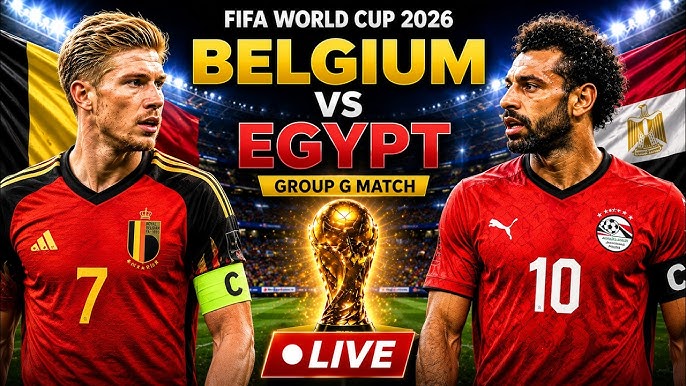
The FIFA World Cup 2026 arrived in the Pacific Northwest with a bang, as Seattle Stadium hosted a compelling Group G opener between European stalwarts Belgium and an inspired Egyptian side. Expectations were heavily tilted toward the Red Devils, who entered the tournament as one of the favorites with a roster bolstered by seasoned veterans and burgeoning stars. However, football remains a sport decided on grass, not on paper. Egypt, led by the tactical ingenuity of Hossam Hassan and the enduring brilliance of Mohamed Salah on his 34th birthday, produced a disciplined, high-intensity performance that pushed Belgium to the brink of a historic upset. Ultimately, the match ended in a 1-1 stalemate, a result that leaves both sides with everything to play for in what is shaping up to be a tight Group G.
Match Overview
- Venue: Seattle Stadium, Seattle, Washington
- Date: June 15, 2026
- Final Score: Belgium 1–1 Egypt
- Winning Margin: Draw
How the Match Unfolded
First Half
Egypt began with a clear intent to disrupt Belgium’s rhythm, employing a compact defensive block that frustrated Kevin De Bruyne and his creative cohorts. The turning point arrived in the 19th minute. Mohamed Salah, operating in a central role, threaded a clinical pass to Emam Ashour on the edge of the area. Ashour took a composed touch before sweeping a precise finish through the legs of Thomas Meunier and past Thibaut Courtois. Belgium struggled to respond before the break, often finding their passing lanes clogged by a resolute Egyptian midfield.
Second Half
The second half saw Belgium increase the tempo, yet they remained vulnerable to Egyptian transitions. Recognizing the need for a physical presence in the box, manager Domenico Tedesco introduced Romelu Lukaku in the 66th minute. The impact was instantaneous. Just 28 seconds after stepping onto the pitch, Lukaku’s movement inside the area forced a defensive error from Mohamed Hany, whose clearance inadvertently steered the ball into his own net to level the score.
Closing Stages
The final 25 minutes turned into a tactical siege. Belgium pushed forward in search of a winner, with Hans Vanaken and Matias Fernandez-Pardo adding fresh legs to the attack. Egypt, however, remained disciplined. Despite a frantic flurry of pressure from the Red Devils, the Egyptian defense—supported by late defensive substitutions—held firm to secure a well-earned point.
Belgium Performance Analysis
Attacking Approach
Belgium relied heavily on individual brilliance, particularly through De Bruyne and Doku. However, they struggled to penetrate Egypt’s low block until Lukaku’s arrival changed the dynamic of the forward line.
Midfield Control
Amadou Onana and Youri Tielemans maintained high possession figures, but their ability to transition quickly into the final third was hampered by Egypt’s aggressive pressing in the middle of the park.
Strengths and Weaknesses
- Strengths: Persistence and the ability to adapt tactically through high-quality substitutions.
- Weaknesses: A lack of clinical movement in the box prior to Lukaku’s entry and susceptibility to swift counter-attacks.
Egypt Performance Analysis
Tactical Discipline
Hossam Hassan’s side executed a perfect “spoiler” game plan. By keeping lines narrow and closing down space for De Bruyne, Egypt minimized Belgium’s opportunities to play through the middle.
Positives and Lessons
- Positives: The side showed maturity beyond their FIFA ranking, proving they can compete with world-class opposition.
- Lessons: Maintaining focus for the full 90 minutes remains the challenge; the own goal served as a stark reminder of the margins at this level.
Match-Winning Moments
- Ashour’s Opener (19′): A masterclass in clinical finishing; Salah’s vision and Ashour’s calm execution defined the first half.
- Lukaku’s Impact (66′): His sheer physical presence upon entry immediately unsettled the Egyptian backline, forcing the mistake that led to the equalizer.
Standout Players
| Player | Rating | Analysis |
| Emam Ashour | 9/10 | His goal was the highlight of the match; he was tireless in midfield. |
| Mohamed Salah | 8/10 | A creative force in a central role; his birthday performance was masterful. |
| Romelu Lukaku | 8/10 | Changed the game instantly; provided the physical focal point Belgium lacked. |
| Thibaut Courtois | 7/10 | Composed despite the pressure; had little chance on the opener. |
Tactical Analysis
Belgium utilized a 4-2-3-1, aiming to overload the wide areas with Jérémy Doku and Leandro Trossard. However, Egypt’s 4-2-3-1 was equally well-drilled, with Hamdy Fathy and Marwan Attia providing a robust screen for the back four. The key tactical battle was Egypt’s refusal to be pulled out of position; they effectively neutralized Belgium’s “half-space” attacks, forcing the Europeans into low-percentage crosses.
Match Stats at a Glance
| Statistic | Belgium | Egypt |
| Possession | 62% | 38% |
| Shots | 14 | 6 |
| Shots on Target | 4 | 2 |
| Yellow Cards | 2 | 2 |
Five Biggest Takeaways
- Lukaku’s Essential Role: Belgium’s reliance on a physical target man remains a defining feature of their attacking strategy.
- Egypt’s Defensive Evolution: The Pharaohs are no longer just a defensive side; their ability to transition and finish shows a higher tier of tactical preparation.
- Salah’s Versatility: Moving Salah into a central role offers Egypt a dynamic edge that many top-tier teams will struggle to handle.
- Group G Complexity: The draw leaves the group wide open, increasing the pressure on both teams heading into their next fixtures.
- Substitutions as a Weapon: The game confirmed how vital squad depth is in the expanded 2026 format, where fresh legs can alter the course of a match in seconds.
Winners and Losers from the Match
- Winner: Romelu Lukaku. His immediate impact solidified his status as the “game-changer” for Belgium.
- Loser: Mohamed Hany. While a disciplined performer, the unfortunate own goal overshadowed an otherwise solid outing.
Impact on Group Standings
With this draw, Belgium and Egypt sit level on one point each. Every point will be crucial in a group that also includes Iran and New Zealand. A draw here means neither team has secured a cushion, making the upcoming second round of group matches essentially “must-win” affairs to ensure a clear path to the knockout stages.
Frequently Asked Questions
Q.1 Who won Belgium vs Egypt?
The match ended in a 1-1 draw.
Q.2 Who scored the goals?
Emam Ashour scored for Egypt, and a Mohamed Hany own goal leveled for Belgium.
Q.3 Who was Player of the Match?
Emam Ashour was instrumental for his goal and defensive work.
Q.4 What does the result mean for the standings?
Both teams share the top of the table with 1 point, though they are currently tied pending other results.
Q.5 Which players impressed the most?
Mohamed Salah, Emam Ashour, and Romelu Lukaku.
Q.6 What are the qualification implications?
It keeps the group very tight, making the next round of matches critical for both nations.
Q.7 How did Belgium’s tactics influence the game?
Belgium dominated possession but struggled to crack Egypt’s compact defensive structure.
Q.8 What positives can Egypt take from the match?
Their defensive discipline and counter-attacking efficiency against a top-10 ranked side.
Conclusion
The 1-1 draw in Seattle provides a fascinating blueprint for the rest of Group G. Belgium has learned that they cannot rely on reputation alone, while Egypt has sent a clear signal to the world that they are a force to be reckoned with. As the teams look ahead to their next matches, the tactical lessons learned on the turf in Washington will be invaluable in their quest to reach the knockout rounds of the 2026 FIFA World Cup.