Sweden vs Tunisia Post-Match | FIFA World Cup 2026
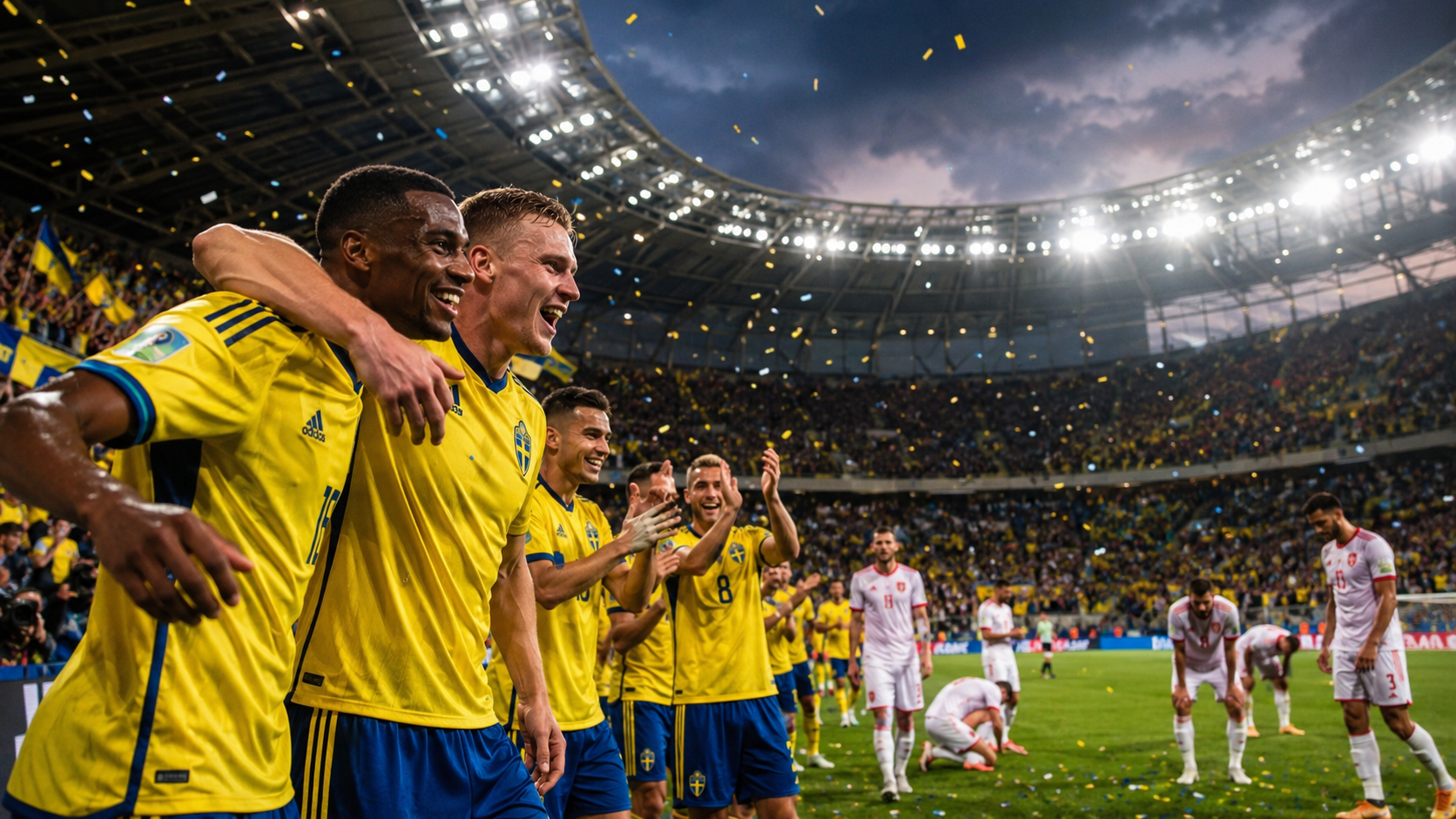
In the grand theater of the 2026 FIFA World Cup, few fixtures carried the weight of expectation—or the potential for tactical intrigue—quite like Sweden’s Group F opener against Tunisia. Held at the Monterrey Stadium in Guadalupe, Mexico, this clash was billed as a pivotal moment for both nations. For Graham Potter’s Sweden, the tournament represented a chance to shed the baggage of a difficult qualifying campaign and prove they belong on the global stage. For Tunisia, a side renowned for defensive rigidity, the match was an opportunity to claim a major scalp and set the tempo in a group also featuring the Netherlands and Japan.
What unfolded was an emphatic statement of intent. Sweden, deploying an ambitious 3-4-1-2 system, dismantled a fragile Tunisian backline in a 5-1 rout that left no doubt regarding their attacking quality. For football purists and casual observers alike, this was more than just a scoreline; it was a tactical masterclass led by the brilliance of Yasin Ayari and a striking partnership that appears primed to threaten the best defenses in the tournament.
Match Overview
- Venue: Monterrey Stadium, Guadalupe, Mexico
- Date: June 14, 2026
- Kick-off: 8:00 PM (Local Time)
- Final Score: Sweden 5 – 1 Tunisia
- Player of the Match: Yasin Ayari (Sweden)
How the Match Unfolded
First Half
Sweden exploded out of the blocks, suffocating Tunisia’s high-pressure aspirations with early tactical precision. Just seven minutes in, Brighton’s Yasin Ayari announced his arrival on the world stage, capitalizing on a Tunisian defensive mix-up to unleash a thunderbolt from distance. The goal settled Swedish nerves and forced Tunisia to abandon their cautious approach. Alexander Isak doubled the advantage on the 30-minute mark, latching onto a sublime pass from Viktor Gyökeres to slot home. Tunisia briefly flickered to life before the interval when Omar Rekik headed home an excellent cross from Hannibal Mejbri, providing a lifeline that seemed to change the complexion of the game heading into the dressing room.
Second Half
The second half, however, belonged entirely to Sweden. Any hopes of a Tunisian comeback were extinguished by the relentless fluidity of the Swedish front line. In the 59th minute, a defensive calamity—triggered by high pressing from Isak—gifted Gyökeres the opportunity to restore the two-goal cushion. As Tunisia pushed for a way back, they left themselves exposed, and Sweden exploited the gaps with clinical efficiency.
Closing Stages
The final ten minutes were pure theatre. Substitute Mattias Svanberg etched his name into the history books with a clinical strike just 12 seconds after entering the pitch. With the result secured, Ayari added the final flourish in stoppage time, drilling a long-range effort into the bottom corner to complete his brace and seal a comprehensive 5-1 victory.
Sweden Performance Analysis
Graham Potter’s side delivered a performance that defied their turbulent qualification form. The 3-4-1-2 formation provided the perfect platform for their attacking talents to flourish.
- Attacking Approach: The duo of Alexander Isak and Viktor Gyökeres was the undisputed highlight. Their chemistry in the final third was telepathic, with both players acting as both goalscorer and creator.
- Defensive Organization: While they conceded, the back three of Lagerbielke, Hien, and Lindelöf remained disciplined, effectively neutralizing Tunisia’s counter-attacking threats for the majority of the match.
- Key Players: Yasin Ayari’s two goals were the headline, but the tactical discipline of Jesper Karlström in midfield ensured Sweden maintained complete control of the tempo.
Tunisia Performance Analysis
For Tunisia, this was a night of profound disappointment. Entering the tournament with a reputation for a formidable defense—having famously not conceded during their qualifying campaign—the Eagles of Carthage were systematically pulled apart.
- Tactical Discipline: The side struggled to find their rhythm, often looking disjointed as they transitioned from defense to attack.
- Defensive Setup: The back four, which has been the bedrock of their international success, looked uncharacteristically nervy. Goalkeeper Mouhib Chamakh endured a difficult evening, struggling to command his area under pressure.
- Positives: Hannibal Mejbri’s contribution—specifically his pinpoint delivery for Rekik’s goal—remains one of the few bright spots to build upon before their clashes with the Netherlands and Japan.
Match-Winning Moments
- The Opener (7′): Ayari’s composure to strike from range after the defensive error silenced the crowd and set the tone.
- The Partnership (30′): Gyökeres’ unselfishness in feeding Isak for the second goal demonstrated the cohesive nature of Sweden’s new look attack.
- The VAR Svanberg Goal (86′): The tension of the VAR check followed by the relief of the goal perfectly encapsulated the intensity of the night.
Standout Players
| Player | Team | Rating | Analysis |
| Yasin Ayari | Sweden | 9.5/10 | A dominant force in midfield; two world-class goals. |
| Alexander Isak | Sweden | 9.0/10 | Unstoppable on the counter; a constant threat. |
| Viktor Gyökeres | Sweden | 8.5/10 | Pivotal link-up play and clinical finishing. |
| Hannibal Mejbri | Tunisia | 6.5/10 | Provided the only creative spark for his side. |
| Omar Rekik | Tunisia | 6.0/10 | Solid aerial header, but struggled defensively. |
Tactical Analysis
Sweden’s transition play was the defining factor. By utilizing a 3-4-1-2, Potter forced Tunisia to commit to their midfield blocks, which allowed Sweden’s wing-backs to push high and isolate the Tunisian full-backs. Tunisia attempted a 4-2-3-1, but they failed to effectively transition, often caught in possession by an aggressive Swedish press. Sweden’s efficiency in the final third—leveraging Isak’s pace against the high line—rendered Tunisia’s defensive plans obsolete.
Match Stats at a Glance
| Statistic | Sweden | Tunisia |
| Goals | 5 | 1 |
| Shots | High | Low |
| Shots on Target | Clinical | Minimal |
| Possession | Dominant | Disjointed |
What This Result Means
This 5-1 drubbing places Sweden at the summit of Group F. With a massive goal difference advantage, they are now in a prime position to advance to the knockout stages. For Tunisia, the path is significantly more difficult; they must now find a way to stabilize their defense and secure points against the Netherlands and Japan to maintain any hope of progression.
Five Biggest Takeaways
- The Isak-Gyökeres Partnership: This is officially one of the most dangerous attacking pairings in the 2026 World Cup.
- Ayari’s Breakthrough: Yasin Ayari has arrived as a legitimate world-class talent, capable of scoring from anywhere.
- Tunisia’s Defensive Collapse: The “defensive wall” of the qualifiers was exposed; they need a major rethink before the next fixture.
- Graham Potter’s Tactical Identity: The 3-4-1-2 system is tailor-made for this roster.
- Group F Wide Open: While Sweden leads, the draw between Japan and the Netherlands makes the next round of fixtures essential.
Frequently Asked Questions
Q.1 Who won Sweden vs Tunisia?
Sweden won 5-1.
Q.2 Who scored the goals?
Ayari (2), Isak, Gyökeres, and Svanberg for Sweden; Rekik for Tunisia.
Q.3 Who was Player of the Match?
Yasin Ayari.
Q.4 What does this mean for the standings?
Sweden sits top of Group F with +4 goal difference.
Q.5 Which players impressed the most?
Isak, Gyökeres, and Ayari were exceptional.
Conclusion
Sweden’s victory was a masterclass in modern international football. They exploited the fragility of their opponents while showcasing an attacking fluency that will have the rest of the tournament on high alert. For Tunisia, the challenge is now psychological—recovering from such a heavy defeat is the ultimate test of character. As the tournament continues, Sweden has firmly planted their flag as a team to watch, while Tunisia faces the uphill battle of a lifetime.